Posts in this category present content related to Executive Reviews of operating activities (businesses, initiatives, functions, units, accounts, etc.).
When an employee departs voluntarily it is almost always unanticipated and unwanted. Too often, though, leaders rationalize that employees who leave voluntarily were marginal and will not be missed.
To keep the best on board, and to head off after-the-fact rationalizations, ask managers now to identify employees they would least like to lose. Go on to also ask what is being done to keep each and every one of them engaged and on track to success in the organization. Follow up to make sure what needs to be done is actually done.
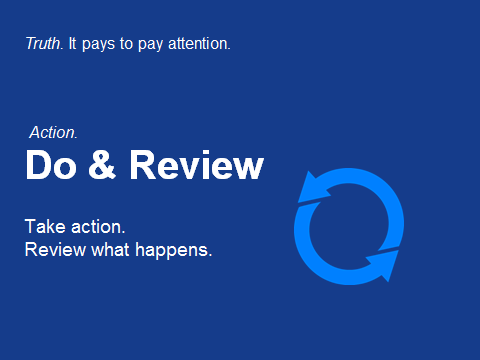
Every leader stands to benefit from the opportunity to regularly review with outsiders what s/he seeks to do, what has been done to do it, what has happened and what has been learned so far, and what s/he plans to do next.
It is harder to set up, operate, and benefit from outside help than it may first appear. Click the featured image above for a slide presentation of lessons learned and best practices that, if followed, will lead to improved performance and growth thanks to help from Accountability Board Members and Subject Matter Experts.
The main reason things go wrong is lack of management attention. Hence the importance of Executive Review Meetings! However, management reviews can also go wrong. Here are eight common reasons why they often do:
# 8. The leaders did not prepare, so the meeting becomes the preparation and the review never materializes.
# 7. Too much time spent on history, story telling, and showboating. It is up to the leaders to be sure that whatever is really important gets covered.
# 6. The leaders talk right up to the end of the meeting and never created a space for the reviewers to ask questions, clarify, challenge, and then offer their best thinking.
# 5. Top management fails to create a safe environment thus turning the review into a sham (a.k.a. dog-and-pony show).
# 4. Management fails to really pay attention to see what needs to be seen and to deal with what needs to be dealt with rather than seeing what they want or hope to see.
# 3. Management fails to generalize what is learned to incorporate and reuse elsewhere
# 2. Management discovers during the review that things are in much worse shape than expected and, without intention, makes the management team feel inept by piling on and trying to help too much in the moment.
# 1. The number one reason why these meetings don’t go well is that the most important reviewers fail to show up due to last minute crises or they show up physically but not mentally.

 When an employee departs voluntarily it is almost always unanticipated and unwanted. Too often, though, leaders rationalize that employees who leave voluntarily were marginal and will not be missed.