
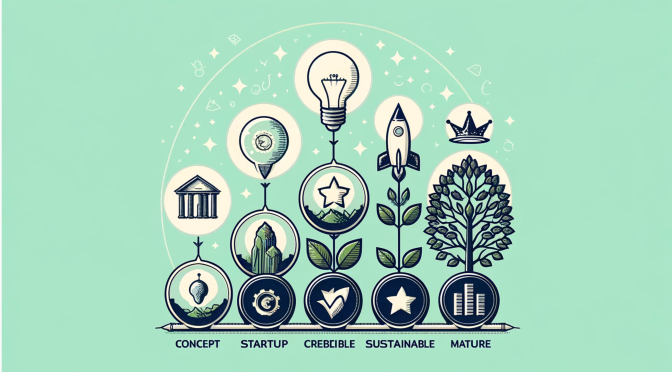
Organizations, like living things, go through distinct stages of growth and development. This maturity model helps us understand the characteristics of organizations at various points in their journey, and how the role of the leader must adapt to navigate each stage successfully.
This post explores the five stages of organizational maturity: Concept, Startup, Credible, Sustainable, and Mature. We’ll delve into the specific leadership requirements at each stage, equipping emerging leaders with the knowledge to guide their organizations through each critical phase.

Concept Stage: The Monomaniacal Idea Maker
The concept stage is all about the initial spark, the unwavering belief in a single, transformative idea. The leader at this stage is the visionary, the “Zealot, relentlessly obsessed with bringing that idea to life. This leader isn’t just passionate, they are monomaniacal, laser-focused on overcoming every obstacle in the path of their vision.
Startup Stage: The Get-It-Done Grit
The concept has legs, and now it’s time to take action. The startup stage requires a leader who thrives in the chaos of creation. This is a “get things done” kind of leader, decisive and driven to take action. Long hours, quick decisions, and the ability to rally a small, passionate team are all essential for navigating the whirlwind of the startup phase.
Credible Stage: From Startup to Credible – The Orchestrator
The shift from startup to a credible organization is a pivotal one. The leader who thrived in the frenzy of the startup stage now needs to evolve into an orchestrator. The focus becomes execution, moving from “doing” to “leading the doing.” This leader builds a strong leadership team, delegates effectively, and establishes systems and processes to ensure consistent growth and performance.
Sustainable Stage: The Team Builder and Motivator
Organizations that reach the sustainable stage have a proven track record and a clear path to continued success. The leader here transitions into a coach and a communicator. They assemble a high-performing team, fostering a culture of motivation and alignment around the organization’s goals. This leader empowers their team, creating an environment where individuals can excel and contribute their strengths.
Mature Stage: The Change Catalyst
At the mature stage, organizations have the potential to become industry leaders, shaping the world around them. The leader who guided the organization to this point must now become a change catalyst. They redefine industry standards, challenge the status quo, and champion new and innovative ways of working. This leader is a visionary, but with the experience and know-how to translate vision into reality, transforming not just their organization, but the world at large.
Leading Through Change: The Essential Traits
While the specific requirements of each stage differ, some critical leadership traits are essential for navigating all stages of organizational maturity. These include:
- Strategic Vision: The ability to see the big picture, to set a clear direction, and to inspire others to follow.
- Adaptability: The agility to adjust to changing market conditions, new opportunities, and unforeseen challenges.
- Communication: The ability to articulate the organization’s vision and goals and where they are now along the way in a manner that collects, aligns, and motivates followers.
- Decision-Making: The confidence to make timely decisions, even in the face of uncertainty.
- Teamwork: The ability to build strong teams and empower individuals to contribute their strengths.
In conclusion, leading an organization through its stages of maturity requires a continuous evolution of the leader themself. From the monomaniacal idea maker to the transformational change catalyst, successful leaders adapt their leadership style to meet the specific needs of their organization at each critical juncture. By understanding the leadership requirements at each stage, emerging leaders can equip themselves with the tools and mindset they need to shepherd their organizations toward a thriving and impactful future.