
Blog








How top MBA students should choose between Operations vs Finance.
Business school students have to decide their course of study from day-1 … and the choice makes all the difference. The first decision almost always comes down to operations vs finance: The allure of finance is working with money to buy and sell companies. Success is when a small stake in a large transaction generates a … Continue reading How top MBA students should choose between Operations vs Finance.
How to head off unwanted voluntary attrition and what to do when it happens.
When an employee departs voluntarily it is almost always unanticipated and unwanted. Too often, though, leaders rationalize that employees who leave voluntarily were marginal and will not be missed. To keep the best on board, and to head off after-the-fact rationalizations, ask managers now to identify employees they would least like to lose. Go on to … Continue reading How to head off unwanted voluntary attrition and what to do when it happens.

What to do when an employee no longer cuts it.
Before terminating an employee for poor performance, first double and triple check that the real problem is not that expectations are undeveloped, unclear, or not understood and aligned with abilities and interest. Resist the temptation to reassign the person to another part of the organization in order to not have to deal with the matter. … Continue reading What to do when an employee no longer cuts it.
Paying Fair: Four paths to fair pay and succession for private venture executives.
Background Public company equity-based pay practices, such as stock, restricted stock, and employee stock options are often a poor fit for private companies committed to reward leaders for performance and growth and to motivate leadership and capital succession. Equity based programs that make sense and work well in a public company come with many ills … Continue reading Paying Fair: Four paths to fair pay and succession for private venture executives.

Empowering Leadership: Cultivating Accountability and Growth in Your Team
I tell everyone who works with, or for, me that they are never to do something because I told them to do it. I do not want or expect anyone to do what I ask just because I told them to do it. Instead, I insist they do what they do because: They understand what … Continue reading Empowering Leadership: Cultivating Accountability and Growth in Your Team

Level Titles
It is a good practice to separate level titles from job functions. This independence allows general criteria to be applied as it makes sense to a given the job function and in a way that transcends job functions so that we can assign someone to a new role without having to rethink the level-title. The … Continue reading Level Titles
How to reduce risks on important projects.
Background on Managing Risk on Important Projects In the context of any strategic initiative involving a significant evolution in systems, process, or organization, risk is the chance that the effort will be less than a complete success … that it will be late, over budget, perform unacceptably when completed, fail to realize the expected business … Continue reading How to reduce risks on important projects.
How to make good decisions even in the face of unresolved issues.
Are people in your organization often second-guessing decisions that have been made?
Here’s a disciplined strategy for making decisions that will stick.

Six reasons every leader should join a peer group.
Every leader stands to benefit from the opportunity to meet monthly in a professionally facilitated session with about a dozen non-competitive peers who are in similar roles, in similar organizations, and at a similar stage of evolution. Leaders who make the one decision to join, as long as they show up, prepare, pay attention, andparticipate, get six distinct benefits that are hard to achieve any other … Continue reading Six reasons every leader should join a peer group.

Leading Beyond Self: The Dynamic Balance of Management and Leadership in Organizational Success
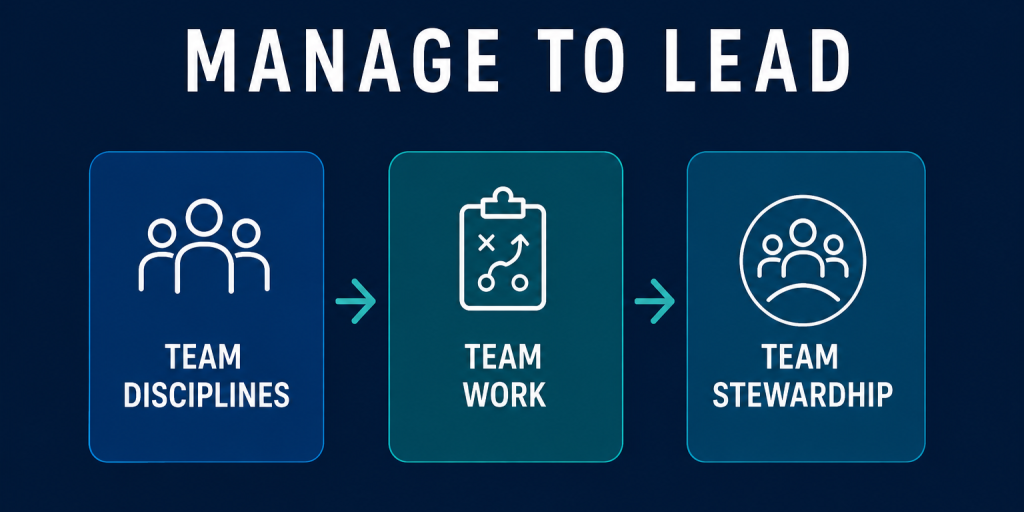
Every organization has, or needs, a leader. And it is true that the power of one committed, clever person can make all the difference in the world. But no one individual, even the greatest leader, does anything of much significance alone. The simple truth is that it takes a team to lead an organization. The … Continue reading Leading Beyond Self: The Dynamic Balance of Management and Leadership in Organizational Success
How an Executive Performance Assessment Process helped a COO become a CEO.
Leaders of fast growing, early stage organizations operate at such a fast pace that often the last thing there is time to do is assess each member of the top team’s performance to determine how to prepare them for the next stage of evolution. Most team members know each other pretty well. They have a … Continue reading How an Executive Performance Assessment Process helped a COO become a CEO.
World Wide Strategy Week Conference Introduces the Seven Truths
Watch the Video above on Manage to Lead: Seven truths to help you Change. The 2014 World Wide Strategy Week, November 4th, featured IntelliVen CEO, PeterD, in a three-person panel on The Role of Leaders in Strategy Success. This seven-minute video introduced Peter and the Seven Truths to conferees.