
An IntelliVen Insight by Eric Palmer.
AI is not a feature cycle.
It is a reset of SaaS economics.
Eric Palmer, a highly successful Senior Operating Partner with more than 30 years of experience leading private, public, private equity-owned, and venture-backed companies, recently shared what he is seeing across software businesses.
Eric uses and has contributed to the development of the Manage to Lead Executive Alignment System for Operations and Governance.
His perspective comes from inside boardrooms, executive searches, and portfolio performance reviews. It is direct.
Act 1: What Is Happening Inside PE-Backed SaaS Companies
Across portfolios, three pressures are converging.
Reinvention as AI-first, not AI-augmented
- Many companies are using AI to optimize what already exists. That feels safe. It preserves roadmaps. It protects org structures.
- It is not enough.
- The companies gaining ground are redesigning around AI economics. That requires discontinuous change, not incremental improvement.
Pricing and economic disruption
- Seat counts are declining. Usage-based economics are rising. AI inclusion without pricing discipline can destroy margin.
- CFOs want predictability. Customers resist variability. Boards want growth and protection of uFCF.
- The old SaaS model is under stress.
Bookings uncertainty
- Buyers are hesitating. Some are delaying category decisions altogether, assuming today’s leaders may not be tomorrow’s.
- Expansion is harder. Contraction is visible.
- Incrementalism does not solve this.
Act 2: The CEO This Moment Demands
The traditional SaaS CEO profile is now necessary but insufficient.
Operational excellence. Team building. Customer focus.
All still required.
But the differentiator now is the ability to lead discontinuous change under pressure.
Eric identifies eight characteristics that matter most:
- Conviction to lead transformation, not manage transition
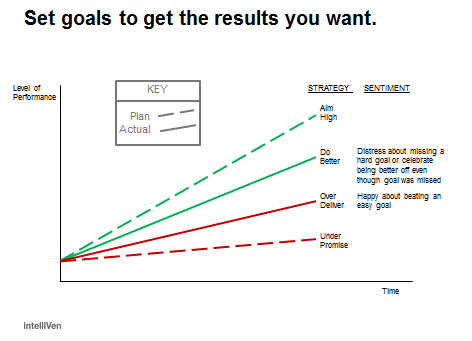
- Audacious goals that reorient behavior before the roadmap is complete
- Ruthless resource reallocation, even mid-cycle
- Willingness to reconfigure strong legacy leaders
- AI fluency that reshapes economics, org design, and personal workflow
- Commercial ownership of the seam between Product and GTM
- Resilience under sustained, ambiguous pressure
- Ability to move at board velocity in a PE environment
In his words, some CEOs optimize what is working.
The ones that win are willing to discontinue what is working in order to win what is next.
Eric also points out that AI-first professionals entering the workforce understand the technology. They have urgency. They have ambition.
What most lack are the leadership and management disciplines required to:
- Align an executive team
- Govern resource allocation
- Make hard priority decisions
- Integrate Product and GTM
- Drive change across a fully formed organization
Technology fluency alone does not create durable enterprise value.
The missing ingredient is not more AI capability. It is executive alignment around Purpose, priorities, and resource allocation. That is the problem the Manage to Lead Executive Alignment System was built to solve.
AI capability without executive alignment produces motion.
AI capability with alignment produces performance.
The Question for Boards and Investors
- Are we selecting for transformation or comfort?
- Is our CEO AI fluent or AI enthusiastic?
- Can our executive team reallocate resources without waiting for the next planning cycle?
- Do we have alignment equal to our technical ambition?
The Variable That Determines Value Creation
Valuations are under pressure.
The path back is not cost cutting alone.
It is radical AI-oriented change that:
- Accelerates productivity and uFCF
- Increases RPE at unprecedented speed
- Reinvests gains into top-line expansion
Those that are audacious and aligned will capture disproportionate share.
Some will.
Many will not.
The CEO is the variable.
Read Eric Palmer’s full article:
“Finding the CEO for What Comes Next.”




 David Halwig, IntelliVen Co-Founder and President of Mid-Atlantic Region, provides strategic management consulting and advisory services to