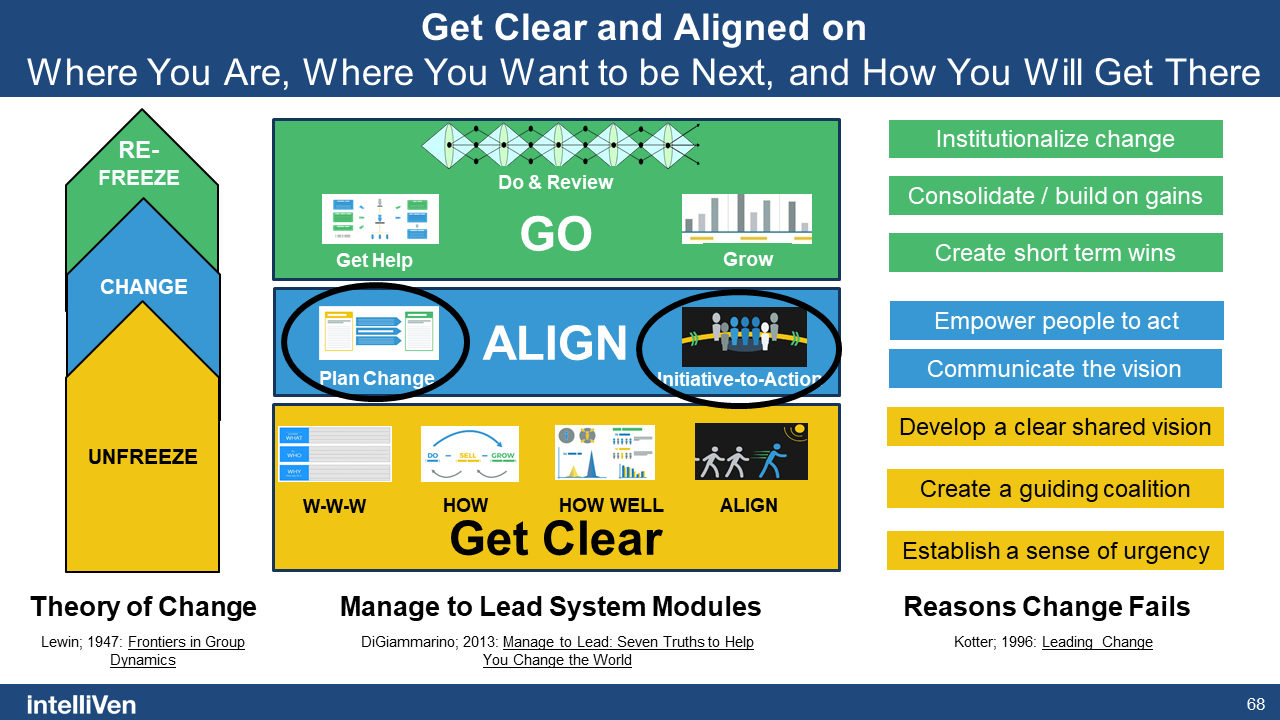
A common challenge faced by leaders is the struggle to advance strategic initiatives due to the overwhelming demands of day-to-day responsibilities. This issue often arises because initiatives are viewed as discretionary tasks rather than integral components of job roles. Addressing this requires a shift in perception and management strategy to ensure that strategic objectives are embedded into the organization’s daily operations.
The Problem
-
-
-
-
Most companies create strategy.
-
Few companies turn strategy into execution.
-
Almost no companies monitor execution.
-
-
-
Tips for Success
- Acknowledge the Dominance of Daily Tasks: Daily responsibilities frequently overshadow long-term strategic improvements. Recognizing this reality is the first step in addressing the imbalance between immediate tasks and strategic goals.
- Integrate Initiatives into Job Responsibilities: Strategic initiatives must be treated as essential duties, not optional ones. Embedding these responsibilities into job descriptions and performance metrics ensures they are prioritized on par with other daily tasks. This integration mandates that participation in strategic initiatives is not just encouraged but required.
- Empower and Enforce Accountability: Establish a leadership team to oversee the implementation of strategic initiatives to ensure that there is a clear line of accountability. This team is responsible for ensuring that all members understand their roles in these initiatives are crucial and will be evaluated as part of their performance assessments.
- Deploy Execution and Monitoring Support: Establish a Program Management Office (PMO) to help develop execution plans with clear deliverables and deadlines. The PMO provides ongoing support and accountability, ensuring timely and accurate reporting to identify needs that must be addressed to ensure initiatives receive necessary help and support.
- Limit the Number of Initiatives: To prevent dilution of focus and resources, it is critical to limit the number of simultaneous initiatives. This approach helps individuals to concentrate fully on achieving significant progress without the burden of juggling multiple priorities.
- Align with Performance Objectives: Strategic initiatives should be clearly outlined in the performance objectives of the relevant roles. This alignment emphasizes the importance of these tasks and ensures they receive due attention and resources, mitigating the risk of being neglected due to daily pressures.
Success Formula
-
-
-
-
-
Set Strategy (Get Clear)
-
Plan Execution (Align)
-
Execute (Do)
-
Monitor (Review)
-
-
-
-
Summary
The pressures of daily operations can easily overshadow strategic initiatives unless these initiatives are ingrained as non-discretionary components of job responsibilities. By making strategic tasks part of performance goals, limiting their number, and providing oversight and accountability, organizations can create a culture where strategic progress is as routine as any other daily activity. This structured approach ensures that strategic initiatives are actively pursued and not sidelined, promoting sustained organization growth and improved effectiveness.