Category Archives: People Matters

Posts related to the people side of strategy and operations

Level Titles

It is a good practice to separate level titles from job functions. This independence allows general criteria to be applied as it makes sense to a given the job function and in a way that transcends job functions so that we can assign someone to a new role without having to rethink the level-title.

The criteria below are generally applicable and have been developed and proven useful over decades of application. Note that the level descriptions stay clear of definitions tied to functions performed and number of people managed in favor of how a person performs and the outputs produced.

Level-1: Demonstrates a high degree of proficiency in some area of great importance to the business. Has applied the proficiency with a high degree of independence and over a sustained period (generally two to three years) and is a recognized expert in the area. Continue reading Level Titles →

Leading Beyond Self: The Dynamic Balance of Management and Leadership in Organizational Success

Every organization has, or needs, a leader. And it is true that the power of one committed, clever person can make all the difference in the world. But no one individual, even the greatest leader, does anything of much significance alone.

The simple truth is that it takes a team to lead an organization. The action motivated by this truth is for the leader to decide what kind of leader to be and then to attract, collect, and align their top team and collect followers.

The best leaders figure out that it is not all about them. It is about their organizations and the decision to either manage or lead is a false dichotomy. The one in charge needs to manage in order to lead and, indeed, can and should Manage to Lead their organization to achieve their stated vision. The top person’s job starts with managing themself to lead.

The leader’s work is never finished; the job is 24/7 and comes with a ubiquitous, omnipresent, and incessant sense of accountability to owners, investors, lenders, donors, customers, taxpayers, partners, employees and their families, and the local community. The mantel
of responsibility is never unyoked and may cause physical distress to those not cut out for the role, or the equivalent of a runner’s high to those who are!
Leadership ResponsibilitiesThe role and specific tasks vary considerably with organization maturity and scale, but the responsibilities presented in the above figure are core to the top job from day-one. Despite the clarity afforded by the list, deciding how to spend time hour-by-hour, day-to-day is far from clear for many, if not most, leaders.

Some leaders wrestle with whether to get work done themselves or to assign and develop others to perform the functions of their organization in an ever-more systematic, teachable, scalable, predictable, and reliable way. As Michael Gerber says in his eMyth Revisited, it comes down to whether the one in charge wants to “make pizza” or “build a pizza-making business.”

When the one in charge decides to do personally what thet believe is needed to get work done, no matter how right it seems at the time, they should consider the following, all of which can lead to less than optimal results:

  • Time spent on a specific thing is time that cannot be spent on something that is more important.

  • Everyone else in the organization will refrain from doing what the person in charge does for fear of upstaging or competing; their default thinking is that “If the top-dog is doing it, they had better not interfere.”

  • Others in an organization tend to assume that what the person in charge does is right and correct, so they fail to think critically about it and so tend not to push back when they should.

The net effect is that the most important thing for the top-person to do does not get done, they end up doing what others can and should do, but now avoid doing, and there is a lack of critical thinking which can lead to poor performance.

The organization’s ability to perform and grow becomes constrained by its top person; and that top person might then wonder if they should work on being a better manager, or work on being a better leader.

Manage to Lead ebook CoverThe answer for most is that theyshould manage to lead as explored in the eponymous IntelliVen workbook.


How an Executive Performance Assessment Process helped a COO become a CEO.

Leaders of fast growing, early stage organizations operate at such a fast pace that often the last thing there is time to do is assess each member of the top team’s performance to determine how to prepare them for the next stage of evolution.

Most team members know each other pretty well. They have a good idea what each other is good at, has contributed, how they have grown, and what they should focus on next for success. However, team members rarely have the time, energy, training, or nerve to share what they know in a forthright, supportive conversation with one another.
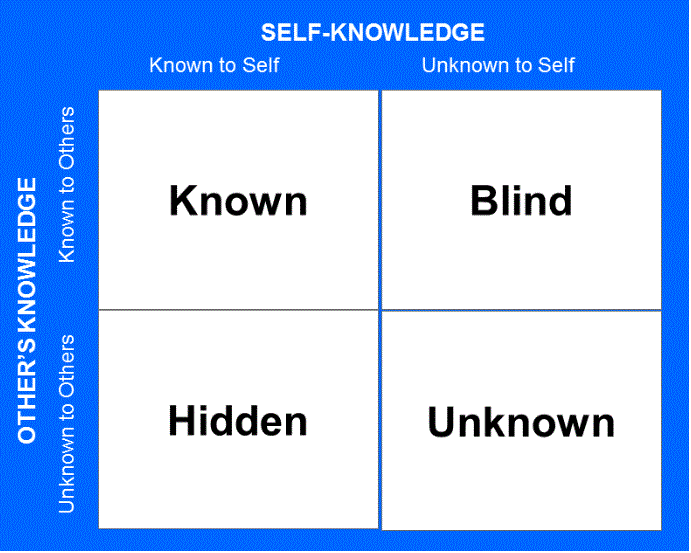
Self Knowledge - Populating Your Johari WindowThe way to improve Individual and team performance is to open their JoHari Window (click the figure  above for more on the JoHari Window). Otherwise they are in the dark about what others know about them that, if they were known, would lead to improved performance.

For example, it came to light during a professionally facilitated Executive Performance Assessment Process that the COO of a $15M, high-performance, and fast growing software firm made those reporting to him feel discounted when he turned to his phone during weekly one-on-one sessions. The team reviewed collected data and decided to let him know his behavior was off-putting and disempowering.

The COO was surprised by the feedback but made a commitment to behave differently. He asked for their assistance to help him change. All were supportive and even chuckled when he placed a sign on his desk during one-on-one sessions that said:

“Tell Me If I Am Being Disrespectful!”

The feedback worked in that his behavior changed. Soon the COO was promoted to CEO with the respect and admiration of his entire team now a $150M enterprise!

A successful Performance Assessment Process collects input from each executive on the others to determine what each:

    • Is good at
    • Has contributed
    • Has done to grow
    • Should focus on next

Input is consolidated, peer-reviewed, and fine-tuned to crystallize the most important messages for each team member.

The best practice is for top teams to implement, internalize, and institutionalize an approach to the essential performance conversations in a way that is straightforward, easy, and routine. The approach is walked through in detail in this video clip (736):

The ideal approach guarantees that the team helps each member individually, and the team as a whole, achieve their full potential to perform and grow. The result is increased likelihood of successful transition to the next stage of organization evolution.Performance Appraisal Data Collection FormThe IntelliVen Executive Assessment Process (see data collection instrument above), in addition, recognizes that a different mix of competencies is key to organization success in each stage of organization evolution (Concept, Start up, Credible, Sustainable, and Mature). In each stage it is important for leaders to recognize how, who, and when an executive should be developed or a new executive brought on board.
Consequently, the ideal assessment process evolves by stage of organization maturity to help the top team identify holes so that they can decide to either groom or hire talent to fill upcoming needs.

For example, in a Start-up, executive skill in risk taking, execution, cash generation (i.e. sales and/or fund raising), and domain expertise are paramount. Strategic product management, operational excellence, and financial acumen are also important but not the same degree as execution competencies.

In the face of upcoming organization growth, the relative importance of key competencies changes to address what comes with organization maturity.

There is no perfect executive leader and no perfect executive team for all stages of evolution. However, a CEO and his/her Core Leadership Team can collectively achieve the needed combination of competency to increase the likelihood that their organization will succeed in the current stage of organization maturity.

IntelliVen helps organization leaders and their top teams fulfill their potential to perform and grow by implementing an Executive Assessment Process that efficiently guides fast moving, growing, early stage organizations to develop each team member, and of the top team as a whole, according to the venture’s evolutionary stage.

Reply to this post in confidence with your contact information to explore further how your organization can benefit from implementing an Executive Assessment Process.

Core points in this post were contributed by Reid Jackson, Dr. Dory Hollander, Dr. Ron Fell, Fred Nader, and Brent Green PhD.

SEE ALSO

Critical Mass for Business radio interview uncovers why peer groups are important to leaders.

Ric Franzi, on Critical MasCritical Mass for Business Radio Shows for Business radio, featured a 50-minute interview yesterday afternoon with Peter DiGiammarino to discuss IntelliVen and Manage to Lead: Seven Truths to Help You Change the World. Click the play button below to listen to the entire show.
An excerpt from their discussion follows:

Franzi:  You have outlined a “Support Structure for Success” of the top executive.  In it you suggest a CEO have an outside Executive Group and Belong to a CEO Peer Group outside their firm.  Would you take us through your thinking and what you why you feel they are so important?

 DiGiammarino: CEOs who participate in peer forums help each other become great CEOs and better people. Specifically:

  • It is a place where a CEO does not have to behave as if s/he knows all the answers and can, instead, be genuinely open to input and where it’s ok to be vulnerable, and even to be wrong, in front of each other; there is no need to put on airs or skirt around the hard stuff.

Continue reading Critical Mass for Business radio interview uncovers why peer groups are important to leaders. →

Volunteer to Improve the World … and Yourself

Act Intentionally...Persist Variously
Act Intentionally…Persist Variously

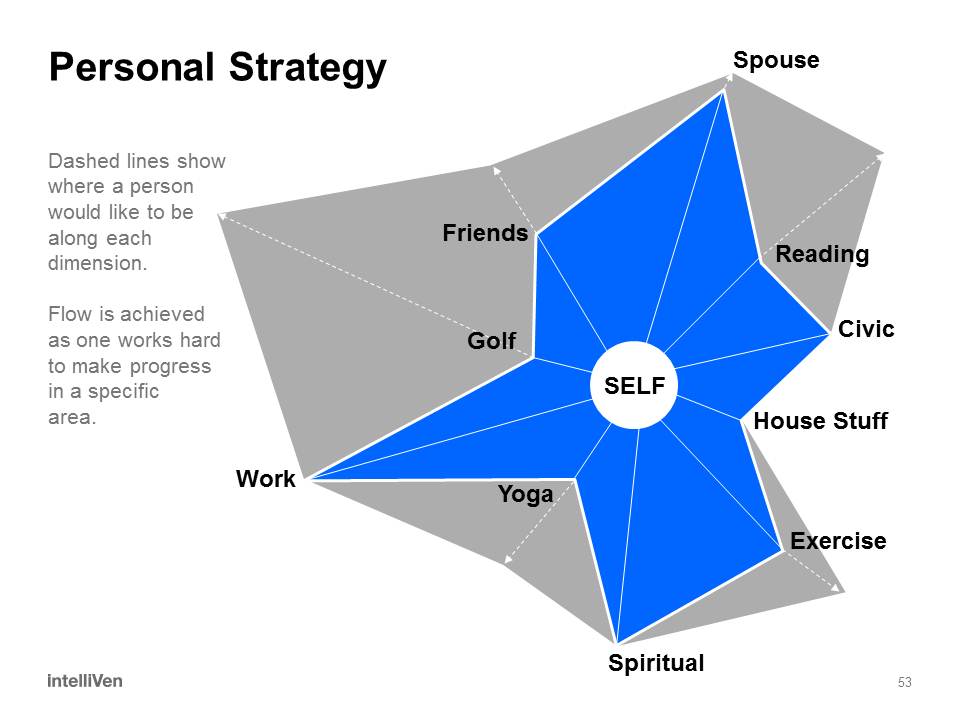
While putting full attention on accomplishing one thing increases the odds that the thing will be done well, it is all too easy for the career minded professional to end up doing nothing other than their work!

They would be wise to realize that top performers at all levels make time for other things such as family, recreation, exercise, spiritual development, and even volunteer work.

Participating in volunteer work can add a healthy perspective to life and position for growth which makes it all the more rewarding to find a way to pitch-in. Continue reading Volunteer to Improve the World … and Yourself →