Tag Archives: accountability

Contract & Govern: The Keys to Leadership Success

A leader’s success hinges on two critical responsibilities:

  • Achieving clarity about what they want from each team member.
  • Effectively communicating their clarity.

Too often, leaders neglect to take the time to define their expectations, leading to confusion and misalignment within the team.

Stephen Covey’s principle of “Begin with the End in Mind” underscores the importance of knowing precisely what you want to achieve before taking action. In leadership, this means clearly articulating the goals and outcomes expected from each team member.

When leaders lack clarity, they cannot expect their team to deliver the desired results. This lack of clarity often stems from the mistaken belief that team members will intuitively understand what is required of them. However, without explicit guidance, team members may interpret goals differently, leading to inconsistency and inefficiency.

Clarity dramatically increases the likelihood of achieving desired outcomes. One might consider this principle in the context of prayer: when we are clear about what we ask for, it likely subliminally enhances our focus and aligns our actions with our intentions, potentially increasing the chances of achieving what we seek, with or without divine intervention. Similarly, in leadership, a leader who is clear and communicates that clarity empowers their team to work toward a shared vision, enhancing collaboration and performance.

Consequently, leaders must prioritize getting clear about their expectations and engaging in rich communication with every member of their team. By doing so, they lay the groundwork for a verbal contract that guides team members toward success, ultimately achieving the leader’s and the organization’s goals..

Contract

Once a leader is clear about what they want from a team member, they should initiate one-on-one conversations to communicate precisely what the team relies on them to achieve. During these discussions, the leader must ensure:

  • The assignment is clear and unambiguous.
  • They believe the person can accomplish the task.
  • They want the person to take on the task.

After explaining, the leader asks the team member to repeat back what they heard to confirm understanding.  Repeat this process until both parties are aligned. The leader must also verify that the team member genuinely wants to complete the task and believes in their ability to do so.

This mutual understanding forms a verbal contract, establishing the team member’s commitment to the task, which is then documented in their performance goals.

Two additional factors ensure success:

  • Resources: The leader provides necessary resources such as time, training, personnel, funding, accountability reviews, and advisors to support the team member.
  • Incentives: The leader motivates the team member by offering rewards like praise, performance bonuses, promotions, or celebratory events (e.g., dinner with the boss or a trip) upon successful completion.

The following graphic presents a way to visualize the steps outlined:

Supervisor-Team Member Contracting

Govern

The primary reason things go wrong is lack of management attention. A wise leader regularly checks in to ensure that front-line actions align with expectations. Make it clear that you are on your team member’s side and that your sole interest is their success. Offer tangible support to demonstrate your commitment, such as sharing your best thinking in the form of notes or drawings or providing key insights and ideas. Encourage your direct report to internalize your input and develop it further as if it were their own.

Effective governance involves regular, structured check-ins between leaders and their direct reports. Leaders should schedule consistent one-on-one meetings with each team member, ideally lasting around 90 minutes and occurring weekly or bi-weekly. Choose a time that is easy to keep, such as 7:30 a.m. every other Monday, and make it a priority to hold these meetings consistently. Reschedule only if necessary and commit to making up any missed sessions. While meetings may occasionally take less time than scheduled, any time saved is valuable.

These meetings should be focused and free from distractions or competing agendas. Avoid combining them with meals, though informal lunches together are beneficial for relationship-building.

During the Meeting:

Team Member’s Presentation:

  • Review Priorities and Progress: The team member presents their priorities and progress from the previous period, supported by metrics. The leader’s role is to ask questions like, “How is it going?” and “How do you know?”
  • Discuss Top Priorities: The team member outlines their top three to five priorities. Engage in a detailed discussion about these items, emphasizing what is happening and how it is progressing. The leader should actively demonstrate support and teamwork, offering resources, training, introductions, and other assistance as needed.
  • Agree on Next Steps: Collaboratively decide on the top items, next steps, and specific actions to be taken. The leader should also determine how they can assist in achieving these goals.

Leader’s Presentation:

  • Share Leader’s Priorities: In about 15 minutes, the leader shares their top three to five priorities. This transparency keeps the team member informed and involved in the bigger picture, helping them understand what the leader is doing for the team’s benefit.
  • Discuss and Solicit Input: Discuss the points raised until there is mutual clarity. Invite input and advice from the team member, valuing their perspective and insights.
  • Commit to Follow-Up: The leader commits to keeping the team member informed about any developments related to their discussion and what the leader is doing that may affect them.

By setting aside regular time for these focused conversations, leaders can maintain alignment, foster collaboration, and ensure everyone is working toward shared goals. This structured approach reinforces a sense of team unity and enhances overall performance.

The following graphic is a way to visualize the steps outlined above:

One-on-One Meetings between Manager and Team Member are key to governing for success.

Summary

Failing to both contract and govern effectively is a recipe for calamity. Without clear agreements and regular oversight, teams are likely to encounter misalignment, confusion, and inefficiency. Contracting ensures that expectations are explicit and mutually understood, establishing a strong foundation for success. Governing maintains focus and momentum by providing the guidance and support necessary to navigate challenges. Together, these practices empower leaders to create a cohesive and high-performing team. By prioritizing both contracting and governing, leaders can avoid pitfalls, foster collaboration, and drive their organization toward achieving its goals. Neglecting these essential practices leaves teams vulnerable to chaos and missed opportunities.

Note

Case: The Ideal Mix of Sr. Executive Team Skills for Success

Case Background

Leaders of fast-growing, early-stage organizations operate at a fast pace. Often, the last thing there is time to do is to assess the top team’s skills and performance to determine how to prepare them for the next stage of growth.

Most team members know each other pretty well. They have a good idea about:

  • What each other is good at doing.
  • What each has contributed.
  • How each has grown.
  • What each should focus on next to improve.

However, team members rarely have the time, energy, training, or nerve to share what they know in a forthright, supportive conversation with one another.

Yet there are serious consequences to not providing feedback when it is needed most. As highlighted in the Wall Street Journal article, “How To Tell If You Are a Jerk in the Office” (C-Suite Strategies, Journal Report, Feb 23, 2015), confidential feedback for executives is important. Not only are leaders and co-workers affected adversely by dysfunctional behavior, but business performance and customer service can be damaged, often permanently, if poor behavior continues.

IntelliVen, a San Francisco-based executive development organization, uses a proprietary approach to help top leaders and their teams address executive feedback issues head-on. For example, IntelliVen worked with a fast-paced, $10M financial analytics firm serving Freddie Mac, U.S. Treasury, and Capital One among other leading financial institutions. The IntelliVen approach was used to assess the firm’s top team of senior executives relative to norms for successful organizations at a similar stage of evolution and to identify individual and team opportunities for learning.

Continue reading Case: The Ideal Mix of Sr. Executive Team Skills for Success

A Practical Guide to Building and Running a High-Performing Board

CEOs often fall into the trap of orchestrating meetings with their Board of Directors to:

    • Show how great they are and how well things are going (whether they really are or not!).

    • Avoid leaving the meeting with more to do than when it started.

A great deal of value can be derived from working with a board, but it takes a concerted effort to build, cultivate, prepare for, and work with individual board members and the board as a whole for that potential to be realized. Efforts to build a high-performing board are well-spent.

Boards Are Not All The Same

Generally speaking, there are three distinctly different kinds of boards. Leaders often mix-up the three kinds which leads to confusion and poor performance. It is critical for a leader to be clear about what kind of board they are working with and to manage it accordingly.

Celebrity Board

A Celebrity Board is comprised of people who bring attention and prestige to the organization and who may, just by their presence, provide access to potentially valuable resources including money, customers, employees, partners, press, and prestige.

Board of Advisors

Board of Advisors is a collection of individuals with directly relevant personal experience in something important that the organization is doing or dealing with. Advisors may have first-hand experience with the same problems the organization faces and offer valuable perspective and insight into best practices, benchmarks, and what will and will not work because they have previously done the same successfully themselves.

Advisory Board members generally each have specific experience, knowledge, and perspective that is often ideally tapped-into in a bi-lateral (i.e., one-on-one) interaction rather than in a group forum where each will struggle to deliver what they think they have been recruited to provide while also jockeying for position and esteem relative to others present.

See the Sample Advisory Board Charter for a way to set up an Advisory Board. The organization leader, or designee, regularly connects with each Advisory Board member to draw on their specific expertise in key situations. In addition, organization leaders meet with the Advisory Board as a group two to four times a year for three or so hours at a time.

For each Advisory Board meeting, organization leaders prepare background material on two or three of the most important things going on, along with specific questions the team is struggling with, that is sent to members two or so days ahead. Advisers read the background material, think critically, and develop a point of view to share. In the meeting, organization leaders talk through key points, field clarifying questions from advisers, and then draw out the best advice from each adviser in turn for each item.

It takes considerable time and effort for the leader to decide what are the most important topics to review in the meeting and to prepare advance materials. It is far easier for leaders to spend little time preparing and to talk extemporaneously off the top of their head in the meeting about what is going on in the organization.

While it is more efficient for the leader, it drives little to no value in the meeting as most of what is covered could have been provided ahead of time. The real problem, though, is that meetings used by leaders exclusively as a platform for briefing attendees, and not to make decisions or to take actions, will lead members to eventually choose to no longer attend meetings.

Accountability Board

The third type of board is an Accountability Board, or Board of Directors, or Governing Board, which has a three-pronged charter (see: Sample Accountability Board Charter) to:

    • Provide a consistent point of accountability. I.e., where management puts before the board a plan and regularly reports on how things are going relative to plan.
    • Help with individual and collective focus. I.e., what the organization, as a whole seeks to accomplish and how it is going, and what each leadership team member is assigned to accomplish and how it is going.

    • Provide access to resources such as ideas, funding, customers, employees, best practices, training, partners, and perspective.

Accountability Board members are generally also invited to also attend and participate fully as Advisory Board members as they are likely experts as something relevant to the organization, but it is rare that expert advisors also happen to be qualified to serve as Accountability Board members.

Accountability Board Mechanics

Accountability Boards meet three or four times a year for a full session and once or twice a year to cover specific items that come up such as approving the annual financial plan before submitting to their bank.

Meetings cover the following standing items for the organization as a whole and for one to three key topics such as strategic initiatives or milestone events such as financing, acquisition, or sale:

  • What management said it would do.
  • What has been done.
  • What happened.
  • What has been learned.
  • What is planned to be done next.

The CEO coordinates with the management team and the board chair to prepare and distribute advance materials for each item.

The organization’s overall fiscal health is the opening topic for every meeting. The financial model, financial plan, and performance projections are reported via the income statement, cash flow, and balance sheet. All three are kept in focus and assessed carefully relative to:

  • Past performance
  • Planned performance
  • Peer performance

and set the context and tone for all other topics.

Advance material on financials summarize the status and highlight key issues. Unless there are major concerns, the financial review should take less than 20-minutes, leaving the lion’s share of time to discuss strategic initiatives and/or milestone events.

Board Chairperson and CEO

It is important for the board chairperson and CEO to facilitate the meeting so that:

    • Points are made once and then move along. A common tendency is for board members to repeat points already made, adding a minor nuance, just to be heard and/or to look smart.

    • Points are covered to the depth required to add significant value. Another tendency is for board members to “go deep” in areas of their personal strength to prove their worth but adding little value.

Each topic is opened for discussion by the CEO or assigned management team member. Board members ask clarifying questions and questions to push-up management thinking. To close discussion on an item, board members each offer their best advice and then move on to the next topic.

Members of the management team attend board meetings and listen carefully to what board members convey through their questions and comments without being the least bit defensive. The board chair works with the CEO to create and maintain a meeting environment in which it is safe for management to say what needs to be said and to be sure leaders hear what needs to be heard.

It is critical for the CEO and board chair to give individual and group coaching when discussions go off track or when participants talk past each other as often happens.

SEE ALSO

The Secret to Creating a Productive Private Company Board of Directors

How a PE Portfolio Company CEO worked with his board after a massive disruption

A proven Path to a Plan in the Wake of Massive Disruption

How to set up and use an Accountability Board

Leadership Support Framework

Director Compensation

Board of Directors FAQs

Guidelines for Interviewing and selecting board members

Case Study: Cracking the Execution Code at Compusearch Software Systems

WWW

Compusearch  (now Unison) was a visionary company with visionary goals. But, as often happens with visionary companies, focus on a long-term strategy to revolutionize a market can mean that near-term execution and operationalization can suffer, creating barriers to growth.

In Compusearch’s case, the company had set out to transform how federal government agencies procure and contract for goods and services.

From its founding in 1983, the company used state-of-the-art software design and development to provide solutions that streamlined and automated key steps in government procurement, purchasing, and contract management.

In 2005, the company arrived at a strategic decision point. The company’s team of owner-operators decided to sell the company and retire. The new owner, private equity firm The Carlyle Group (Carlyle), saw immense potential in the company and its pedigree of quality innovation. 

But Carlyle also saw that the change in ownership was an ideal time to assess how the organization operated and to upgrade to more effective strategy execution and operations maturity. Maturing operations turned out to be essential to achieving the goal to double revenue and increasing margins to realize a 4X return on invested capital within five years.

Highly innovative companies often suffer from a lack of focus on operating fundamentals, which becomes an impediment to growing to the next stage of maturity. Carlyle saw evidence that Compusearch could benefit from a renewed and refreshed approach to turning its vision into action.

Carlyle and Compusearch engaged IntelliVen to assess the company’s operational maturity, develop a plan to implement strategy, and generate more effective performance to drive growth.

The Challenges

Like many visionary companies, Compusearch had become a decisive market leader with a strategy of continuous innovation and breaking new ground with its solution offerings.

By 2005, the company had reached $15 million per year in revenue. Its procurement and purchasing solutions were operating in nine cabinet-level departments and related agencies across the United States federal government.

It had achieved this leadership position by continually updating and innovating its solutions as software design and the underlying system capabilities evolved over two decades.

The company’s newest solution was web-based software to support government contract officers who procure, contract, and requisition the spending, granting, and moving of public funds in compliance with mandated government rules, transparency, efficiency, and control.

IntelliVen guided the company’s top team through its structured process to get clear, aligned, and then grow. Alignment came from the clarity reached by the team jointly making explicit what they each saw, and what they were each thinking, so they could then work together to come up with a consolidated view of where things were and what they needed to do.

1. Great vision but not enough focus on operational execution

Compusearch had reached a leadership position in its industry by pursuing a vision with continuous innovation. But oftentimes this approach can cause a company to become distracted. It ends up chasing the new technology and functionality without tuning its operations and processes to generate the most value from the innovations it has already brought to market. There were many more opportunities for the company to extend and expand the value it provided to current customers with its existing solutions at existing customers.

2. Lack of coordinated direction and team alignment

The executive team in Compusearch was made up of highly experienced managers who knew the market and their functional domains of responsibility. But there was no consistent melding of vision and strategy coordinated across functional teams, to ensure everyone was always rowing in the same direction. As a result, the company found itself often in reaction mode, not effectively promoting its current offerings to customers to generate more business. Key items fell between organizational units, resulting in unmet client needs, as well as confounded employees. In some cases, initiatives were confined to a particular unit, such as the development team, without the full benefit of coordination with other groups such as those providing customer services.

3. No clear process for strategy operationalization

Like many companies, the corporate vision for revolutionizing federal government contracting was well understood by top executives. But exactly how that vision translated into individual goals, commitments, and resource allocation was not all that clear. Each executive had to decide for themselves how best to support overall corporate goals.

4. Inconsistent and ineffective use of metrics for tracking and accountability

Compusearch executives collected and studied metrics that were relevant to their own functional domains. But they were not as effective at combining and assessing these metrics in terms of the story they told for overall corporate performance and strategy implementation. A sales leader would announce a customer win that generated widespread acclaim in the company. But it was rare for anyone to ask whether the price was aligned with the firm’s strategy or if the licensing terms would generate the most value over the long term.

The Solutions: Aligning Compusearch for Execution

IntelliVen Founder and Managing Partner, Peter DiGiammarino, worked with the new Compusearch CEO, Reid Jackson, to explore how a new, fresh approach to strategy execution and operating practices could be implemented across the company.

Together they implemented four initiatives using IntelliVen tools, workstreams, and tutorials for best practice operations.

1.    Effective focus on strategy implementation: the W-W-W and Initiative-to-Action

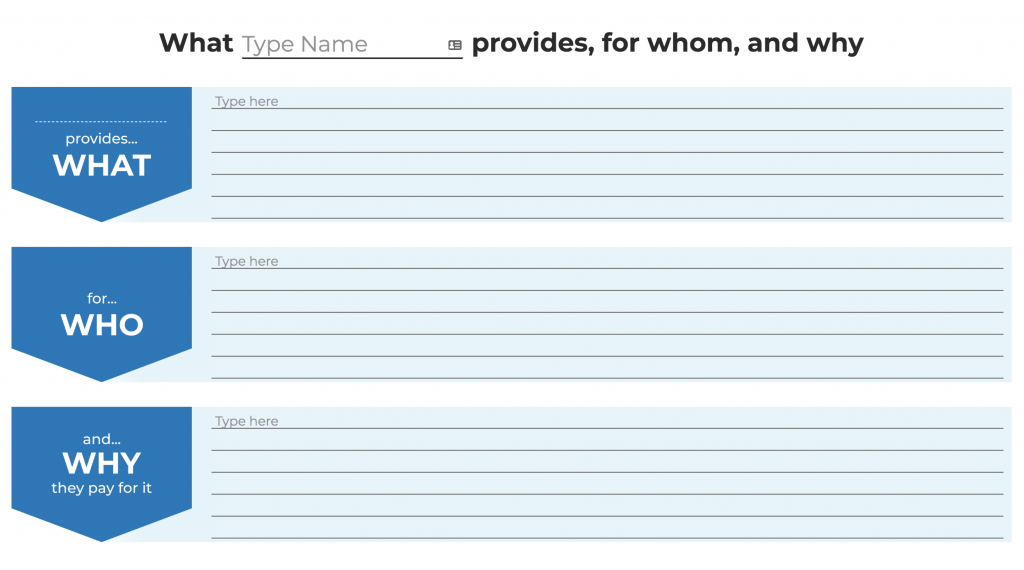
Peter introduced the W-W-W model – the exercise in which senior managers gain great clarity on

  • WHAT they are selling.
  • WHO is buying it.
  • WHY they buy it.

By working together to reach a common, crisp and simple understanding of the overarching purpose of the company in this way, the company core leadership team instantly become more closely aligned in terms of strategy and action. As Peter describes it, nailing down the W-W-W is the first step any organization needs to take to enable a team to, “Get clear, Align, and Grow!

Peter also provided the team with guidance to turn strategy into reality using the IntelliVen Initiative-to-Action template.

The Initiative-to-Action template helps ensure that strategic planning session outcomes are acted upon. It requires managers to connect the dots between corporate strategy, the case for change, individual goals, resource allocation, performance metrics, actions, timetable, accountability, and outcomes.

2. Core leadership team alignment: set direction, execution focus, incentives

The new model for the executive team featured cross-team communication and cross-organizational performance tracking. That way, each executive knew what was required of their group and, in turn, could clearly identify the needs they had for others. The resulting cross-team dependency tracking set the direction for the team and focused the executives on execution. The new accountability was enhanced by tying executive incentives to hitting cross-group targets in addition to individual performance goals to align resources.

3. Strategy operationalization: market expansion, sales execution, accountability & governance

Clarity on strategy and aligning the team in the same direction allowed the Compusearch team to then explore executing more effectively on the overall strategy.

For example, the team saw new opportunities for revenue expansion in existing customers with solution refinements, such as offering new billable services that previously had been a support expense.

Knowing who to count on for what made it possible to also introduce new responsibilities such as account and project management. Every employee could see clearly what they could do to step up to and help identify, develop, and deliver on every opportunity to provide more value to customers.

Lastly, the new approach to operationalization created a framework for accountability and governance. Now each executive and each member of the staff understood what was expected of them and performance against these requirements was easy to measure and track.

4. Metrics to drive and track effective operationalization

With the newfound accountability and alignment of goals and dependencies, the executive team had the ability to use key metrics to track and improve execution and operationalization.

The performance of every department – product engineering, customer support, professional services, marketing, sales – could be tracked and evaluated using metrics and benchmarks that guided team decisions and next actions.

When these metrics indicated a problem was arising in a given area, the team could readily see how each member could contribute to address the problem. The approach promoted accountability for execution and brought leadership together as a high-performance team that worked to make each other – and the company as a whole – successful.

The Outcomes: Compusearch’s organization evolution and growth

With the IntelliVen best practices guidance, Compusearch embarked on a transformation that resulted in much more effective execution and strategy operationalization.

The results were dramatic increases in top-line revenue, growing more than 200 percent in four years. Other impacts included:

  • Driving the EBITDA-margin plus growth-rate to over 50.
  • Increasing recurring revenue to more than half of total revenue.
  • Shifting from selling one product in a narrow market to selling multiple products into multiple markets while at the same time maximizing revenue from existing customers.

Compusearch had achieved a much more advanced stage of organization maturity. After four years of growth, the company sold for a ~4X multiple of invested capital. The company was eventually renamed Unison and, over the past fifteen years has successfully executed its business and financial plans, completed several accretive acquisitions with more on the horizon, and is on track to exceed $180 million in annual revenue. All-and-all a great win-win-win-win-win: for the company, its customers, employees, investors, and the community in which it operates.


BREAKTHROUGH PERFORMANCE IMPROVEMENT

 
MtL is for organization, unit, and function leaders and their teams who seek breakthrough improvement in performance and growth.
 

How CEO’s should use Accountability Boards and Subject Matter Experts to help their organization perform and grow.

leadership-support-structure-featured
How to set up and use accountability boards.

Every leader stands to benefit from the opportunity to regularly review with outsiders what s/he seeks to do, what has been done to do it, what has happened and what has been learned so far, and what s/he plans to do next.

It is harder to set up, operate, and benefit from outside help than it may first appear. Click the featured image above for a slide presentation of lessons learned and best practices that, if followed, will lead to improved performance and growth thanks to help from Accountability Board Members and Subject Matter Experts.