Category Archives: People Matters

Posts related to the people side of strategy and operations

How entering executives can increase the odds of successful transition.

Fast-growing and otherwise successful organizations often outpace the rate at which they can groom and grow senior executives to keep up with the need to guide and govern increased scale and complexity of operations. Consequently, they bring top talent in from the outside.

As outlined in a previous IntelliVen post, a senior hire is hardly a path to guaranteed success. Similarly, a Harvard Business Review article by Jean Martin in 2014 reports: “Outside hires take twice as long to ramp up as a leader promoted from within. Astoundingly, C-suite executives report that only one out of five executives hired from outside are viewed as high performers at the end of their first year in-house. And ultimately, of the 40% of leaders who are hired from outside each year, nearly half fail within the first 18 months. The direct and indirect costs of the failures are staggering, far exceeding the cost of the search that found the executive.”

The Usual Case

Executive transition is hard for the receiving organization and for the entering executive. Fortunately, there are things both can to do increase the odds of success.

One of the toughest things for a senior executive to do is transition into an existing system of operation. At first, during the “honeymoon period”, a lot about the entering executive seems to incumbents to be new and different. It may at least be interesting, and at most exciting, to let the “new guy” operate with a high degree of independence hoping and trusting that good things will happen, especially given how much he or she is being compensated.

After six months or so the honeymoon is over and results start to speak for themselves.

Rarely is everyone happy.

Differences that once made the entering executive seem interesting now make him or her seem odd. Incumbent executives sour and adopt a wait-and-see attitude, leaving it to the entering executive to sink-or-swim on their own thereby increasing the odds of failure. In the worst, and all too common, case some incumbents ostracize and/or try to accelerate the entering executive’s demise.

The story is much the same from the perspective of the entering executive. At first, there is an exhilarating air of difference.  Everything is new and exciting with much to figure out and to absorb. The opportunity to have a major positive impact induces what seems an endless rush of euphoric excitement. All too soon these feelings devolve into isolation and loneliness along with the realization that no matter what good is accomplished, everyone will wonder why there was not more.

Recommended Approach

A programmatic approach to new executive transition does not guarantee success but it increases the odds and shortens the time frame in which it is achieved. The objectives are to:

  • Raise the incumbent team’s individual and collective consciousness as to what the entering executive is to accomplish and the definition of success in the first six months, in the first year, and beyond.
  • Turn incumbent executives from observers to stakeholders in success so that their energy, wisdom, insights, and ideas are constructively channeled to work with and for the entering executive rather than evaluating, but not contributing to, success.
  • Accelerate the entering executive’s learning curve and integration into the organization’s leadership network.
  • Promote interest in, and commitment to, the entering executive and his or her vision for the organization’s future

The result is to make the entire team accountable for success, not just the entering executive.

Conduct pre-meetings to promote Relationships-That-Work: The entering executive first meets offline at least twice with every direct report and key members of the leadership team, one-on-one for a couple of hours, in order to open a channel of communication and to begin to develop a relationship and build trust with each team member.

This is done before official work business needs to happen between the two, perhaps in the weeks prior or just after starting in the new role. Meetings should be off of the worksite and in a low-stakes venue that appeals to the person with whom the incoming executive is meeting such as a leisurely lunch or dinner, a golf outing, a walk in the woods, etc.

It is not possible for a new leader to effectively take charge without knowing the people who work directly for him or her. The same goes for working with key stakeholders. Pre-work meetings are to open channels and begin to get to know each other. The executives also verify that they can see themselves being an important person in each other’s lives.

Subordinates that the entering executive cannot fathom getting close to may as well be let go right away because it never gets easier as time marches on. Similarly, incumbents that feel they will just not be able to have a productive relationship with the entering executive should raise and deal with it sooner rather than later.

As the incoming executive starts to work full-time, the opportunity to open constructive channels of communication declines markedly due to day-to-day pressures. This makes it harder to develop a productive relationship and all the more difficult to ever work well together.

Give Guidance not Orders: The safest approach for subordinates reporting to the entering executive is to find out what he or she wants and then do it. Unfortunately, this is sure to backfire. The entering executive needs to make clear that no one should ever do anything just because he or she said to do it. Instead, everyone should do what they do because they believe it is the right thing to do, they want to do it, and they agree it should be done.

Help and Impress: The incoming executive needs to earn the respect of each team member and direct report. Until the incoming executive greatly helps or otherwise impresses each incumbent, there will persist an element of doubt that torments, and possibly sabotages, their working relationship. The incoming executive should consciously seek, find, and deliver on a way to help (or otherwise impress) each incumbent as a gesture of genuine kindness and support, asking nothing in return. If the incoming executive tries too hard, tries and fails, or is pompous, the odds of success are reduced.

Engage in Critical Business Activity:  The incoming executive surveys what is going on across the organization to select a high-stakes activity to become integrally involved with; such as a key sale or a difficult client, delivery, or product development challenge. The project provides a foil for the incoming executive to:

  • Work with strong people from different parts of the organization on something important.
  • Learn how the best people get things done.
  • Find out who knows what.
  • Experience firsthand how things come together in the clutch.

It also gives the entering executive a chance to make a contribution to the organization and earn a reputation for leadership and success while providing input towards developing a well-grounded picture of the way things work currently and an outline of how things need to work in the future.

It may at first seem wiser for the entering executive to help out on a small, simple effort rather than something big-and-hairy out of the gate. It turns out that doing something small does not teach much about how the best of the organization gets put to work, is not very visible, and simply does not matter much. The better strategy is to learn all there is to know from pitching in on something big and important as soon as possible.

Operate with Excellence:  The entering executive also establishes a pattern of excellence in operations characterized by:

  • Clarifying what they seek to accomplish, why, when, and how.
  • Having a team of strong players with complementary skills who thoroughly enjoy working together to accomplish their common goal as described in this post.
  • Clarity with respect to performance metrics that will be tracked to know how well things are progressing towards stated goals and then driving to design, build, and put in place processes to routinely collect, organize, analyze, and present performance data in an easy to manage fashion.
  • Installing systems for performance goal setting, performance appraisals, salary reviews, incentive compensation awards, personnel resource allocation, and professional development.
  • Having routine oversight, guidance, and direction to selected programs, projects, and key personnel.
  • Being prepared for, attending, and participating in leadership forums such as executive team meetings, operating meetings, and initiative reviews.
  • A pattern of stating goals and performance projections followed by actual results consistently meeting or exceeding goals and projections.

Executive Session: At about the three-month mark, the entering executive prepares and presents a summary of what he or she has done, seen, and begun to envision to that point. It is too soon to have done much and certainly no one will expect everything to be sorted out yet so there is a lot of leeway. On the other hand, it is long enough that there should be some good data and thinking going on and it is time for the hiring manager and stakeholders to review that thinking and to nudge it in the right direction if it is off base.

The hiring manager calls the meeting and ensures, ideally with the help of a trained facilitator, a safe space is created. They work with the incoming executive to prepare and to facilitate the briefing session to ensure incumbents are interested and helpful and that the incoming executive:

  • Puts their  best foot forward
  • Listens carefully to questions and guidance from the group
  • Completes action items in a timely manner.

In three more months, roughly at the six-month mark, the entering executive ought to have a pretty good handle on what they think they can and should do to deliver on the promise to make a major contribution. The next executive session is held at the half-year mark for the incoming executive to lay out:

  • How things are now.
  • Why things need to change.
  • How things will be when they are changed.
  • What they plan to do to affect the intended change.
  • What will be hard about making the envisioned changes.

This leads to a rich discussion about whether the incoming executive’s perception of the current state rings true, whether the reason for change and target state are agreed to, and a discussion as to whether the planned initiatives are right and what it will take for them to succeed.

If things are off track, the incoming executive takes the guidance and goes back for another try and another review in at most a few weeks. If it is again off-track then it is probably time to wonder if the incoming executive is in the right role. On the other hand, when the session reveals solid thinking, analysis, and plans that are on track for success then the hiring manager provides further guidance as for any other executive as outlined in this post.

Bringing in top talent from the outside to keep up with success is never a sure thing but organizations that work at improving their odds of success put themselves in position to perform disproportionately better than most. More well-developed organizations that have the scale, resources, and stakes to justify so doing may want to augment the suggestions above with an even more aggressive Executive Transition Support Program to further enhance their odds of success.

How to use meeting ground rules to shape behavior and improve performance.

High-performing leaders act intentionally. Meeting ground rules help a team consider and decide how they want to behave with each other in meetings and in general. Meetings become a place in which to establish and work on target behaviors.

Meeting Owners (see: How to Run a Great Meeting/) on their own, with their team (see: How to Form a Core Leadership Group), and with help from a trained facilitator if available, should agree on three to six ground rules.

Each rule is consistent with how the leader wants people to behave in meetings and in general. When introduced for the first time, walk through each rule and encourage discussion to be sure it, and the reason for it, are clear and to get buy-in. To encourage clarity and promote buy-in, a good approach is to tweak the rule as needed in response to team input.

Too many rules, or rules that are complex, can be confusing or overwhelming so keep the list short and the rules simple. Start with just a few that seem most appropriate and add others as needed and as the group becomes comfortable developing, managing, and using rules. Drop rules that become second nature and that no longer need to be called out in favor of those that need to be added to next shape behavior.

Ground rules persist from meeting to meeting so there is no need to develop new ground rules for each meeting. It is a good practice to have a few basic ground rules that are used at all meetings and it is fine to have a few that are specific to what a given group is working on next.

Review ground rules to open each meeting to remind attendees how they should work with each other. Meeting Owners should make it a point to walk through all ground rules for new attendees ahead of, or at the start of, their first meeting.

Ground rules to choose from:

  • Act as part of collective leadership vs. representative of a constituency
  • Everyone participates, no one dominates.
  • Stay mentally and physically present.
  • One person speaks at a time; no side conversations.
  • Start and end on time.
  • Work the point, not the person.
  • Commit random acts of kindness.
  • Stay on point; avoid long-winded stories and irrelevant detail.
  • Pay attention, show respect.
  • Say what is on your mind IN the meeting not afterward.
  • Seek first to understand.
  • Show up on time.
  • Come prepared.
  • Be insightful and supportive. Think before speaking.
  • Deal with the real issues; avoid seeing only what you want to see.
  • Summarize, consolidate, and crystallize key insights to share with others.
  • Recognize the positive and celebrate success.
  • Respect confidentiality; if sensitive matters are shared, they stay in the room.
  • No storytelling.
  • No grandstanding.
  • Stay until after the meeting ends.

Procedure:  On a whiteboard or on posted newsprint or poster paper, list ground rules in lettering large enough for everyone in the meeting to easily read. At the beginning of each meeting, until they are all second nature, the Meeting Owner or Facilitator, asks the group to agree on, and commit to following, posted ground rules. Add or adjust rules as appropriate to give power and ownership to the group and to accommodate special circumstances.

Appoint an attendee to monitor performance relative to the ground rules. If a rule violation occurs, work with the group to agree on whether and how the Monitor should intervene; e.g., by flashing a signal (for example, holding up a yellow card or making a specific gesture with their hand). A good strategy is to agree that if the Monitor fails to intervene when a violation occurs, any and all participants are to bring it to the Monitor’s attention and remind them to ask the offender to follow the rules or, if appropriate, work with the group to adjust the rule.

The scheme to use a Monitor works well because it is usually much easier for participants to address the Monitor for not jumping in than it is for them to give feedback directly to an offender when a rule is violated. In this way, the entire group efficiently works together to routinely follow the rules.

If the Monitor does not agree to take action in response to group prodding or if the Monitor consistently fails to perform the function, the role should be reassigned. If a single person gets more than three rule violations, they may be asked to leave the meeting. If a rule violator fails to leave, the meeting may be adjourned at the discretion of the group and or the meeting Owner.

See Also

How to run a great meeting.

The next big lift in performance!

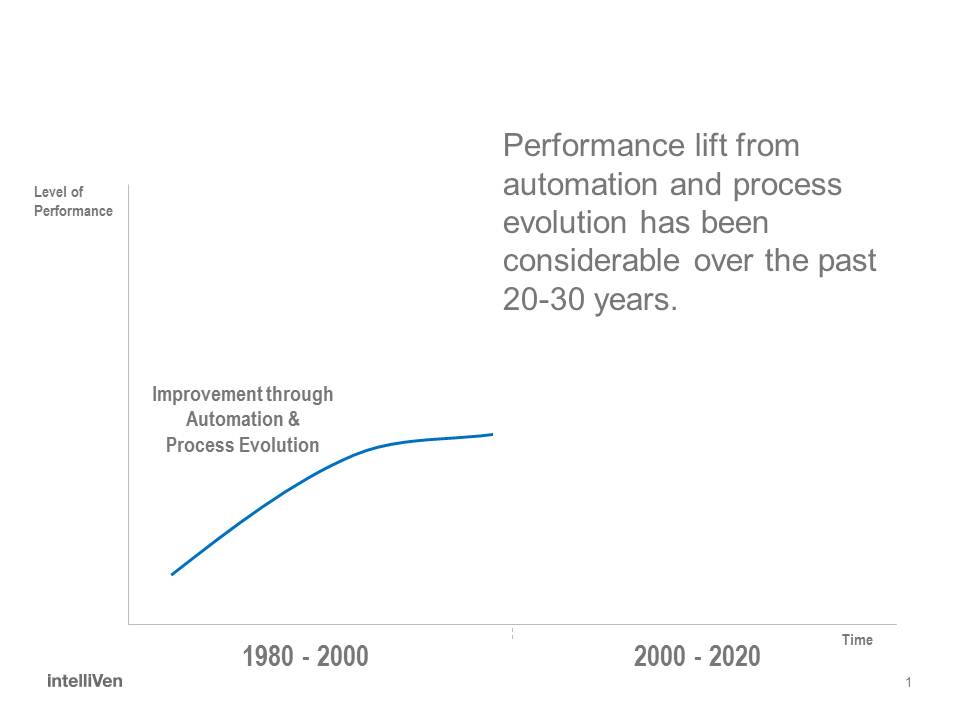
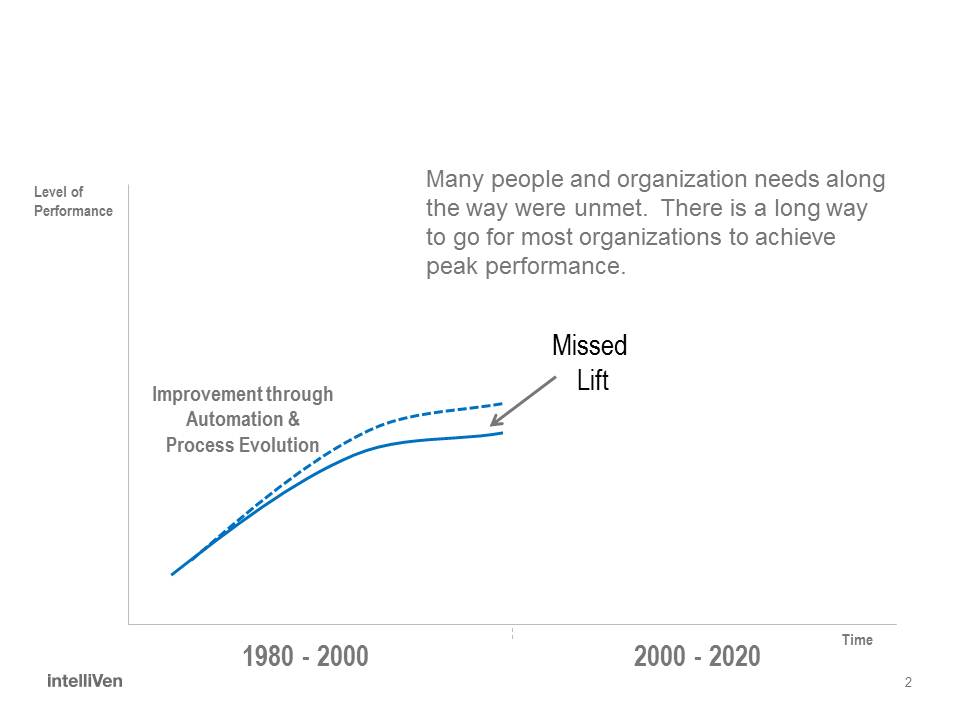
For decades organizations have sought and achieved productivity and performance improvement through information technology and process engineering initiatives. While these efforts streamlined and automated what organizations do to provide services and products, they failed to address many people and organization needs along the way. As a result, we still have a long way to go in order to achieve peak performance as suggested by figures 1 and 2 below.

 Automation and process evolution improve performance
Figure 1: Automation and process evolution improve performance.
There is a long way to go to achieve peak performance
Figure 2: There is a long way to go to achieve peak performance.

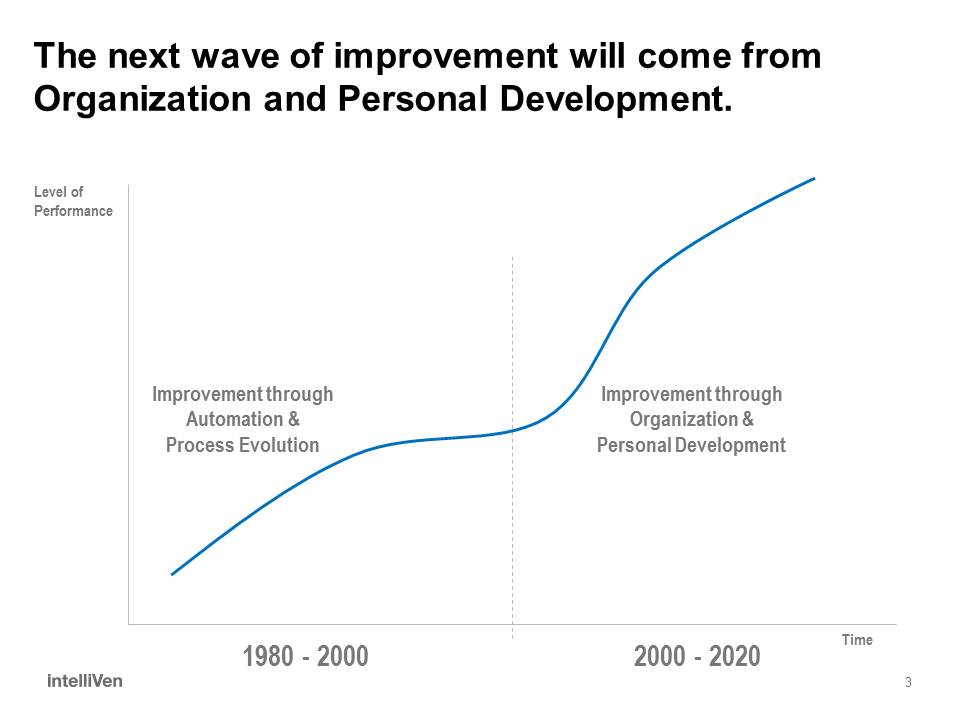
While the next wave of performance improvement may come from augmented reality, artificial intelligence, the internet-of-things, or any number of other things, it can also come, as suggested in figure 3, from enhancing the way people perform as individuals and together in groups, teams, and organization units. Leaders at all levels are challenged to get the most from their organizations and change initiatives by developing each person and their teams to fulfill their potential to perform and grow.

Organization & personal development provide the next wave of improvement
Figure 3: Organization & personal development provide the next wave of improvement.

Unfortunately, the skills to effectively lead this wave are not yet widely known or effectively taught and are difficult to figure out on-the-job even among bright and highly motivated professionals.  These skills can, however, be learned and immediately put to work to improve performance in any organization.

IntelliVen content is rooted in the discipline of Behavioral Science as applied to real-world experiences by pioneering executives and cutting-edge executive coaches in public, private, venture-backed, and private-equity-owned for-profit, not-for-profit organizations.

Leaders and coaches can put the tools, methods, and principles posted on the IntelliVen site into highly effective practice and success in social, public, and commercial sector organizations of all sizes and stages of evolution.

It is hard to interest organization leaders in lifting performance through improved interpersonal dynamics. The reason is that it is harder to grasp than, say, buying a system or changing a business process.

As such it is incumbent upon those who sell and deliver improvement through upgrading behavior, to package and describe offerings in tangible terms. For example, rather than pitching Manage to Lead as tools, methods, and principles that help an organization to achieve its potential to perform and grow, it may be more tangible, and therefore more “buyable” if it is introduced as the Manage to Lead System and delivered in a staged, systematic, deliberate way.

The other key is to sell the benefit delivered, not the process by which it is achieved. For example, following the Manage to Lead System will increase growth rates and improve profit margins. That it does so principally by getting people and teams to work better together is incidental to the final result though it is an extraordinarily efficient way to achieve it.

SEE ALSO

Toolbox

Insights

How to be a good group facilitator to help your organization and to grow as a leader when the opportunity presents itself.

Serving as a group facilitator at a workshop is an important assignment that can help make the difference between the session being a big success or not.  It is also an opportunity to be, and to grow as, a visible leader.  Do not pass up the opportunity to rise to the occasion and to do a first-rate job that makes a great impression.  Do all you can to help your organization achieve its objectives because your performance, and the positive results you help generate, will be noticed!

Your job as a facilitator is to:

  • Create, promote, and use a safe environment that ensures those in your workgroup participate fully and that their task is understood and completed successfully and on time.
  • Model target behavior.

How to get ahead by working well with people who are at more senior levels in organizations you work with.

Early-stage professionals should look forward to and take advantage of opportunities to interact with people in client, partner, or supplier organizations at more senior levels of scope and scale of responsibility than they are used to working with.  While it might initially be difficult to muster the courage and conviction to play at a higher level, it is often an opportunity to learn and likely to be career-enhancing if things go well.

The call to connect with a more senior player, whether it is to make a sale, handle a delivery issue, launch a new initiative, or negotiate contract terms, might first evoke a sense of fear and the urge to demur.  The question: “How can I possibly go toe-to-toe with someone at such a senior level?” may come to mind. The following tips encourage and prepare up-and-coming star performers to get good at leveling-up:

  • While at first it may seem counter-intuitive, it is usually easier to communicate with more senior level executives. Higher-ups tend to be smarter, nicer, more competent, and genuinely more impressive people. After all, they got to higher levels for a reason! Along these same lines, if you are tired of dealing with people who just don’t get what you are saying and who are otherwise difficult to deal with, it may be time to give yourself a break and start working with those who have higher levels of responsibility.
  • Be confident in yourself. Know that you have earned the right to connect with more senior executives and got the call to do so for a reason. There is no reason to think that you are fated to work with underlings your entire career.
  • Ultimately, no matter how lofty they happen to be in the organization, even the most senior executive is just a person with likes and dislikes, memories and dreams, pleasures and ailments just like your own! Genuinely connect on a personal level to get off to a good start with anyone at any level of any organization.Find common ground (home towns, schools attended, places worked, sports teams followed, places visited, etc.) for conversation fodder along these lines. See: How to Win Friends and Influence People.
  • When called to connect at more senior levels than you are used to dealing with, it will surely occur to you that there must be someone who could do the job better and who you might like to hand-off to. To make the call is an opportunity to excel.  Doing well is to separate the “wheat from the chaff” and become a stand-out performer. Bolster your courage and just “do it.” It is not as hard as it first seems, gets easier every time, puts you in position to deliver extraordinary value, has a remarkable positive impact on your career and your self image, and it is part of your job!
  • Top organizations expect their most senior executives to establish connections with top executives in partner, supplier, and client organizations and to use those connections to manage engagements, grow and develop new business, deal with problems, negotiate terms, etc. It is part of life at the top of an organization. Your value as an executive to your organization, and in the marketplace, is significantly impacted by your ability and track record to perform well with outside senior executives.
  • When there is urgency, for example, due to a delivery issue, a technical glitch, or a dramatic market or economic event, it is easy to get attention from top executives. Take advantage when trouble happens and get to the top people in the organizations you work with. It sometimes makes sense even to create an “urgent problem to be solved” to promote a sense of urgency, get connected to top players as part of addressing the issue, and then institutionalizing senior level connections with periodic executive reviews.
  • People, even the most senior-level executives, love to feel important. Research and study executives you will connect with and listen carefully to collect fodder you can use in conversation to let them know you know and understand them. Make them feel important by what you say about who they are and about what they know and have done.
  • Stay on an adult-to-adult level; do not drop into a mindset of a child in the presence of an adult. Once you adopt an inferior or subordinate demeanor it is tough to recover.
  • Before making contact, allow yourself to feel what it  will be like through role-play. Specifically, put yourself in the situation you will be in with the target executive. Script what you plan to say and enlist a colleague to play the role of you while you assume the role of the one who you will contact.  Internalize how the executive will behave in the face of your script in order to work out responses to questions they might have and to improve your approach.
  • Despite all the planning, there will be unexpected developments and you will be in a better position because of your preparation. Expect the unexpected and be ready to think on your feet and follow your instincts. See related post on preparation for high-stakes sessions.
  • During the conversation, “helicopter-up” to an omniscient perspective every five or ten minutes and ask yourself:
    • What is going on here?
    • Are things going the way I want?
    • What do I need to do to stay on or to get back on, track?
  • Do not focus on the rewards for doing well or the penalty of not doing well. Such thoughts tend to induce anxiety rather than stimulate peak performance (see: www.theinnergame.com.) Tell yourself that you can do it and do well. Concentrate on matters at hand and on doing even more with what got you where you are today.
  • Look for an opportunity to add value in the moment or immediately following the session. For example, if the executive likes a music group or sports team that happens to be in town and you can get tickets, offer to do so. Be sure to follow-through for maximum gain. See: Gitmore’s: The Little Black Book  of Connections.
  • Take good notes and write them up as soon as you disengage.  Bullet points that summarize substance tend to be more useful than rambling prose. A record of exactly what is said with no editorializing will be most likely to later bring back full recall of key points just as they were originally made. See: https://intelliven.com/note-on-meeting-records/
  • As soon as the  meeting is over, think about how things went. Review your performance. Note what seemed to go well and where you think you could have done better. Talk about the experience with others whose input you value. Make a plan for how you will do better next time. See: point in this post on making notes after a high-stakes interview.
  • Enjoy yourself. You will perform better if you like what you are doing and have fun doing it.  Lighten up and be your best. Dance!