Category Archives: Plan Change

Decide what must change, why and how.

From Vision to Action! How to Align Your Team and Execute Your Plan

In today’s rapidly evolving landscape, having a clear and well-defined strategy to win the game you are playing is critical. It’s the roadmap that guides your organization towards its goals and ensures that every action and decision aligns with your vision.

However, crafting and implementing an effective strategy can be a complex and daunting task. This is where the IntelliVen Strategy and Planning Offsite comes into play.

Why the Strategy and Planning Offsite with IntelliVen?

If you’re at the helm of an organization, you understand the importance of strategic planning. You also know that it’s not enough to simply have a strategy; strategy needs to be translated into a practical operating plan that guides your team’s actions throughout the year. The IntelliVen Strategy and Planning Offsite helps leaders like you bridge the gap between strategy development and successful execution. 

The Strategy and Planning Offsite empowers you and your executive team with:

  • Clarity: Achieve a clear and common understanding of your organization’s current state, the case for change, and your target next state.
  • Strategic Initiatives: Identify strategic initiatives that will propel your organization from its current state to where you aspire to be next and prioritize actions that will close the gap based on their impact and feasibility, culminating in a roadmap for implementation.
  • Resource Allocation: Determine roles, responsibilities, and resource requirements for your most important initiatives. This includes allocating the staff, time, money, and other resources needed to make them a reality.
  • Financial Alignment: Align your financial and operational plans with your strategic initiatives. This ensures that your strategic initaitives are not side-jobs to be done as time permits but, instead, are woven into the mainstream of day-to-day activities.
  • Effective Communication: Develop a clear communication strategy to convey your vision and plan to all stakeholders, including your board, investors, employees, and partners.

The Outcomes

Working with IntelliVen Senior Oprating Partners, leaders will achieve key outcomes from their Strategy and Planning Offsite:

  • Alignment:  Participants agree on your current state, case for change, target state, and the necessary actions for each strategic initiative.
  • Implementation Readiness: Lay the groundwork for the successful implementation of strategic initiatives, and establish a governance process understood and agreed upon by all participants. 
  • Team Cohesion: Participants leave the offsite with a deeper understanding of each other and a stronger commitment to the organization’s mission and leadership.

Get Started with IntelliVen

If you’re ready to take your organization  to the next level, it’s time to consider the IntelliVen Strategy and Planning OffsiteContact us to learn more about how our team can help you identify and reach your strategic goals for the long-term.
Invest in your organization’s long-term future with the IntelliVen Strategy and Planning Offsite.
Contact us now!

Key to Operating Success in a Crisis

With baby boomers entering their last stages, Private Equity invested in senior residences ahead of the certain increase in demand as an aging population would surely seek community, comfort, support, and safety from communal living. COVID-19 changed the calculus overnight. WeWork and Airbnb represent two more niches that are forever changed…as are many more.

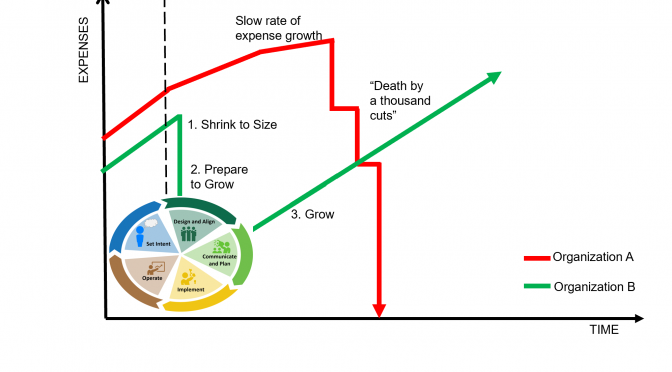
The time-honored formula for managing operations in crisis is simple and straightforward:

  1. Shrink to the size you can afford
  2. Prepare to grow
  3. Grow
Watch this video for an explanation of how to avoid “death by a thousand cuts” and come out strong instead in a crisis!

While shrinking to size takes force of will, it can be done by just deciding to do it. Preparing to grow is harder and takes careful thought and planning.

IntelliVen is management’s guide, especially in a crisis, to maturing operations in sync with stage of venture evolution to create maximum value in minimal time. 

In this time of crisis, we want to share what we have learned with you and your team. Join us for a FREE online session. 


Plan Evolution

The following sequence leads to a fully developed financial plan that the CEO, Executive Leadership Team, Senior Leadership Team, board, and employees all buy-in to achieving:

  • Executive Leadership Team (ELT) takes the Senior Leadership Team (SLT) offsite to review where we were, where we are, and where we’re headed, what we’re proud of and what we need to work on next following the script laid out here.

    While it is important to have both a high-level top-down and a preliminary sense for a bottom-up view of the financial plan, the offsite is not mostly about the numbers … it is about strategy.

    Specifically, what is working, what is not working, what is possible, what do we want to do, and what are we going to do. The objective is to set the context for the top down aspirational view of the future to iterate and come together with the bottom-up view during the detail planning.
  • The ELT briefs the board in the fall meeting to share how the current year is turning out, status on key initiatives, and to proffer/review/tweak planning guidance for next year.
  • Then All Hands meeting communicates the where we were, where we are, and where we’re headed with the full backing and support of the SLT, broader leadership team, and the board. Note how it all cascades down from CEO to ELT to Broader Leadership Team to Board to Company as a Whole, building an ever broadening base of support for what the CEO carries as a vision and direction.
  • Then, the bottom-up planning begins in earnest with each unit of major responsibility preparing and reviewing with the CEO how they have done, what they are working on next, and how things will be going forward.
  • The sum of the unit plans needs to be greater than the plan because it is unreasonable to plan on absolutely everything going according to unit plans.
  • The CEO and ELT strive to construct a top-down plan that is rational relative to the bottom up plans. They iterate until the top-down and bottom-up plans are in sync and judged to be aggressive but achievable…for example Planned Revenue ~= Firm Revenue (i.e., Booked & Highly Probably) + 1/3 (Highly Qualified Pipeline).
  • The spring All Hands is to inform everyone how things are going and to engage the whole company in moving forward on the top one, two, or three Strategic Initiatives.
  • The spring ELT offsite is for the top team to bond, assess, refresh, and get a common sense for each other, how things are going, and where things are headed.

SEE ALSO

Annual Process
Annual Planning Offsite POAD
How to Run a Great Annual Planning Offsite

How to use the Change Framework to turn initiatives into action.

If the leader thinks they know what needs to change and that everyone is aligned, ask: “How do you know your team knows what you want to do? It may be a good idea to ask them to verify. If they all say what you expect them to say, a positive step towards getting what you want done will have been taken just by bringing it to the center of their attention. If it turns out that some or all of the team are not as aligned as expected, then remedial steps can be taken.”

Survey the leader’s top team and ask them each:

  • To describe the current state, that is: how things are today.
  • What really good things happen if we change and what really bad things happen if we do not?
  • To describe how things would be in the future if their ideal changes were successfully implemented.
  • What needs to be done in order to get from where things are today to where things would ideally be next?
  • What will make it hard to do what needs to be done in order to get from today to the targeted next state?

Review results with the leader to bring him/her up to speed on the group’s data. Look for and discuss fully any points the leader finds confusing or surprising.

Convene an offsite with the leader and the leadership team to review collected data, reach consensus on each of the five topics, and decide what needs to be done. At the offsite, review survey responses one question at a time in the order above. Highlight responses that are the same or similar thereby indicating progress towards consensus. Guide the group to discuss the data until agreement is reached on how things are today, why things need to change, and how things would be if the desired change had been implemented.

The Change Framework
Use the Change Framework to make the case for each Strategic Initiative.

The Change Framework is a convenient way to visualize and store the group’s consensus using a diagram similar to that originally introduced by Richard Beckhard and Wendy Pritchard in Changing the Essence: The Art of Creating and Leading Fundamental Change in Organizations, Jossey-Bas Inc., San Francisco, 1992.

Fill out the Change Framework to make a clear and compelling case for each initiative.  Iterate with the team until all members are crystal clear about each initiative.

If participants share their thinking openly, fully, and honestly they can go a long way towards achieving clarity and alignment. An effective leader then holds the results of these efforts and furthers their development, communicates progress to stakeholders, and assigns, aligns and drives resources in their pursuit.

Figure-2: Follow the above tips to build a clear and compelling case for the change driven by each initiative.

A well formulated initiative, using the Change Framework, tells a story about where things are, why they need to change, how things would be if the intended change occurred and what must be done to get from here to there. A well crafted change framework is rational, compelling, and flows smoothly from the present through to the future.

Follow the tips in Figure-2 to piece together the context and the story for each of the initiatives the organization must do next to stay on track to long-term growth and performance.

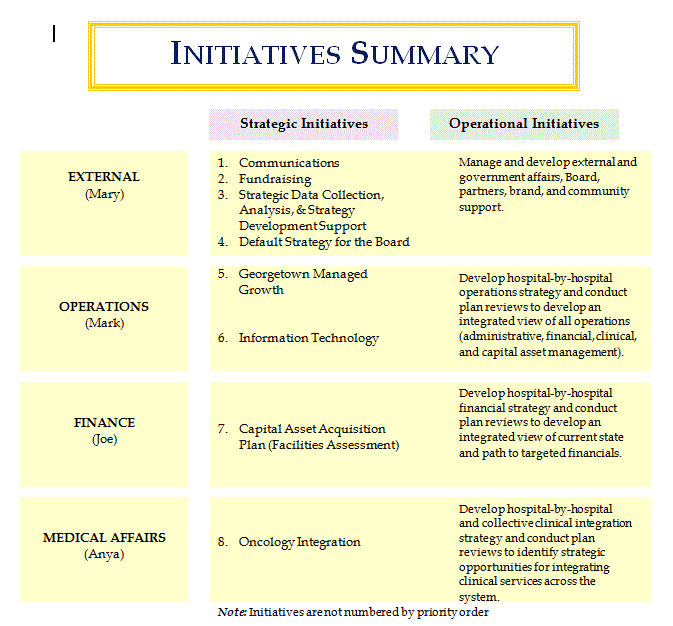
Figure-3: A classic looking list of initiatives from an executive off-site.

Many management offsites produce a list of initiatives, such as shown in Figure-3, after intense effort and exhilarating breakthroughs. A list without context, though, fails to reveal the motivation and importance behind each initiative and so makes it difficult to communicate or to muster the energy, resources, and commitment beyond the session needed to implement them.

Using the Change Framework instead of a simple list helps but even still, far too often, the same initiatives are again listed at the next offsite with little if any progress since last time simply because no one was put in charge and resources never allocated to implement them.

Upon reaching agreement, the group may feel drained but good about what it has accomplished. It is important to make sure the group knows it has done great work and come a long way but there is still more important work to be done. Their effort may be for naught unless one more step is taken.

After the list of initiatives is developed and before ending the session the leader assigns each team member to:

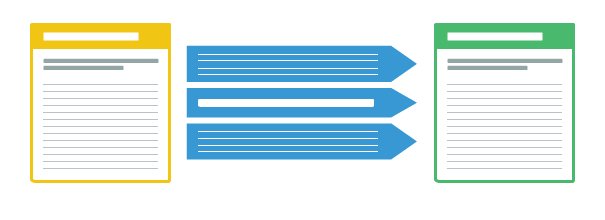
Figure-4: Click on the figure to fill out and submit the Initiative-to-Action form for a Strategic Initiative.


  • Take 20-minutes to fill out an Initiative-to-Action template using the link in Figure-4, for a specific initiative, preferably one the leader would like the team member to sponsor
  • Lead the group in a brief discussion about the assigned initiative.

Each team member, in turn, briefs the group on their initiative using the filled out Initiative-to-Action form. As each speaks, the rest of the leadership team adopts the mindset of close adviser and on the same team as the one speaking. Their objective is to ensure that the key points from the group’s work are captured so that the best thinking of the group is at-hand and in mind as efforts to progress with the initiative proceed on the heels of the session.

Filling out and briefing the Initiative-to-Action form launches the governance process and gets a leadership team member into the role of the initiative’s executive sponsor and on-the-hook to make progress on behalf of the group.  As such the team member becomes accountable to the group for progress on their initiative. Motivation and commitment soar and the odds of making progress go up as well. Over the ensuing performance period, the leader calls on each team member at some point to brief the group on how their initiative is progressing.

Example Change Framework:

Example Change Framework for an organization whose leaders decided to move from a functional to a cross-functional approach to client services.