
Tag Archives: leadership

Contract & Govern: The Keys to Leadership Success

A leader’s success hinges on two critical responsibilities:

  • Achieving clarity about what they want from each team member.
  • Effectively communicating their clarity.

Too often, leaders neglect to take the time to define their expectations, leading to confusion and misalignment within the team.

Stephen Covey’s principle of “Begin with the End in Mind” underscores the importance of knowing precisely what you want to achieve before taking action. In leadership, this means clearly articulating the goals and outcomes expected from each team member.

When leaders lack clarity, they cannot expect their team to deliver the desired results. This lack of clarity often stems from the mistaken belief that team members will intuitively understand what is required of them. However, without explicit guidance, team members may interpret goals differently, leading to inconsistency and inefficiency.

Clarity dramatically increases the likelihood of achieving desired outcomes. One might consider this principle in the context of prayer: when we are clear about what we ask for, it likely subliminally enhances our focus and aligns our actions with our intentions, potentially increasing the chances of achieving what we seek, with or without divine intervention. Similarly, in leadership, a leader who is clear and communicates that clarity empowers their team to work toward a shared vision, enhancing collaboration and performance.

Consequently, leaders must prioritize getting clear about their expectations and engaging in rich communication with every member of their team. By doing so, they lay the groundwork for a verbal contract that guides team members toward success, ultimately achieving the leader’s and the organization’s goals..

Contract

Once a leader is clear about what they want from a team member, they should initiate one-on-one conversations to communicate precisely what the team relies on them to achieve. During these discussions, the leader must ensure:

  • The assignment is clear and unambiguous.
  • They believe the person can accomplish the task.
  • They want the person to take on the task.

After explaining, the leader asks the team member to repeat back what they heard to confirm understanding.  Repeat this process until both parties are aligned. The leader must also verify that the team member genuinely wants to complete the task and believes in their ability to do so.

This mutual understanding forms a verbal contract, establishing the team member’s commitment to the task, which is then documented in their performance goals.

Two additional factors ensure success:

  • Resources: The leader provides necessary resources such as time, training, personnel, funding, accountability reviews, and advisors to support the team member.
  • Incentives: The leader motivates the team member by offering rewards like praise, performance bonuses, promotions, or celebratory events (e.g., dinner with the boss or a trip) upon successful completion.

The following graphic presents a way to visualize the steps outlined:

Supervisor-Team Member Contracting

Govern

The primary reason things go wrong is lack of management attention. A wise leader regularly checks in to ensure that front-line actions align with expectations. Make it clear that you are on your team member’s side and that your sole interest is their success. Offer tangible support to demonstrate your commitment, such as sharing your best thinking in the form of notes or drawings or providing key insights and ideas. Encourage your direct report to internalize your input and develop it further as if it were their own.

Effective governance involves regular, structured check-ins between leaders and their direct reports. Leaders should schedule consistent one-on-one meetings with each team member, ideally lasting around 90 minutes and occurring weekly or bi-weekly. Choose a time that is easy to keep, such as 7:30 a.m. every other Monday, and make it a priority to hold these meetings consistently. Reschedule only if necessary and commit to making up any missed sessions. While meetings may occasionally take less time than scheduled, any time saved is valuable.

These meetings should be focused and free from distractions or competing agendas. Avoid combining them with meals, though informal lunches together are beneficial for relationship-building.

During the Meeting:

Team Member’s Presentation:

  • Review Priorities and Progress: The team member presents their priorities and progress from the previous period, supported by metrics. The leader’s role is to ask questions like, “How is it going?” and “How do you know?”
  • Discuss Top Priorities: The team member outlines their top three to five priorities. Engage in a detailed discussion about these items, emphasizing what is happening and how it is progressing. The leader should actively demonstrate support and teamwork, offering resources, training, introductions, and other assistance as needed.
  • Agree on Next Steps: Collaboratively decide on the top items, next steps, and specific actions to be taken. The leader should also determine how they can assist in achieving these goals.

Leader’s Presentation:

  • Share Leader’s Priorities: In about 15 minutes, the leader shares their top three to five priorities. This transparency keeps the team member informed and involved in the bigger picture, helping them understand what the leader is doing for the team’s benefit.
  • Discuss and Solicit Input: Discuss the points raised until there is mutual clarity. Invite input and advice from the team member, valuing their perspective and insights.
  • Commit to Follow-Up: The leader commits to keeping the team member informed about any developments related to their discussion and what the leader is doing that may affect them.

By setting aside regular time for these focused conversations, leaders can maintain alignment, foster collaboration, and ensure everyone is working toward shared goals. This structured approach reinforces a sense of team unity and enhances overall performance.

The following graphic is a way to visualize the steps outlined above:

One-on-One Meetings between Manager and Team Member are key to governing for success.

Summary

Failing to both contract and govern effectively is a recipe for calamity. Without clear agreements and regular oversight, teams are likely to encounter misalignment, confusion, and inefficiency. Contracting ensures that expectations are explicit and mutually understood, establishing a strong foundation for success. Governing maintains focus and momentum by providing the guidance and support necessary to navigate challenges. Together, these practices empower leaders to create a cohesive and high-performing team. By prioritizing both contracting and governing, leaders can avoid pitfalls, foster collaboration, and drive their organization toward achieving its goals. Neglecting these essential practices leaves teams vulnerable to chaos and missed opportunities.
Note

The Evolving Leader: Leading Through Stages of Organization Maturity

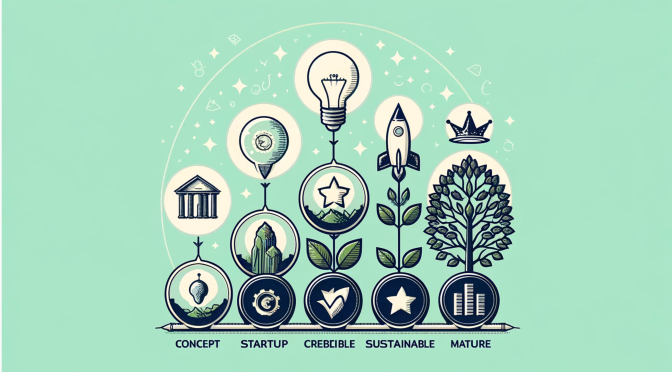
Organizations, like living things, go through distinct stages of growth and development. This maturity model helps us understand the characteristics of organizations at various points in their journey, and how the role of the leader must adapt to navigate each stage successfully.

This post explores the five stages of organizational maturity: Concept, Startup, Credible, Sustainable, and Mature. We’ll delve into the specific leadership requirements at each stage, equipping emerging leaders with the knowledge to guide their organizations through each critical phase.

Concept Stage: The Monomaniacal Idea Maker

The concept stage is all about the initial spark, the unwavering belief in a single, transformative idea. The leader at this stage is the visionary, the “Zealot, relentlessly obsessed with bringing that idea to life. This leader isn’t just passionate, they are monomaniacal, laser-focused on overcoming every obstacle in the path of their vision.

Startup Stage: The Get-It-Done Grit

The concept has legs, and now it’s time to take action. The startup stage requires a leader who thrives in the chaos of creation. This is a “get things done” kind of leader, decisive and driven to take action. Long hours, quick decisions, and the ability to rally a small, passionate team are all essential for navigating the whirlwind of the startup phase.

Credible Stage: From Startup to Credible – The Orchestrator

The shift from startup to a credible organization is a pivotal one. The leader who thrived in the frenzy of the startup stage now needs to evolve into an orchestrator. The focus becomes execution, moving from “doing” to “leading the doing.” This leader builds a strong leadership team, delegates effectively, and establishes systems and processes to ensure consistent growth and performance.

Sustainable Stage: The Team Builder and Motivator

Organizations that reach the sustainable stage have a proven track record and a clear path to continued success. The leader here transitions into a coach and a communicator. They assemble a high-performing team, fostering a culture of motivation and alignment around the organization’s goals. This leader empowers their team, creating an environment where individuals can excel and contribute their strengths.

Mature Stage: The Change Catalyst

At the mature stage, organizations have the potential to become industry leaders, shaping the world around them. The leader who guided the organization to this point must now become a change catalyst. They redefine industry standards, challenge the status quo, and champion new and innovative ways of working. This leader is a visionary, but with the experience and know-how to translate vision into reality, transforming not just their organization, but the world at large.

Leading Through Change: The Essential Traits

While the specific requirements of each stage differ, some critical leadership traits are essential for navigating all stages of organizational maturity. These include:

  • Strategic Vision: The ability to see the big picture, to set a clear direction, and to inspire others to follow.
  • Adaptability: The agility to adjust to changing market conditions, new opportunities, and unforeseen challenges.
  • Communication: The ability to articulate the organization’s vision and goals and where they are now along the way in a manner that collects, aligns, and motivates followers.
  • Decision-Making: The confidence to make timely decisions, even in the face of uncertainty.
  • Teamwork: The ability to build strong teams and empower individuals to contribute their strengths.

In conclusion, leading an organization through its stages of maturity requires a continuous evolution of the leader themself. From the monomaniacal idea maker to the transformational change catalyst, successful leaders adapt their leadership style to meet the specific needs of their organization at each critical juncture. By understanding the leadership requirements at each stage, emerging leaders can equip themselves with the tools and mindset they need to shepherd their organizations toward a thriving and impactful future.

Emerging Leaders: Mastering Group Process for Success

As an emerging leader, the ability to effectively navigate group work is a critical skill. Too often, we find ourselves in situations where groups become mired in the easy tasks, neglecting the more challenging but equally important aspects of the work. In this post, we will explore key strategies to help you and your teams break this pattern and achieve greater success in group settings.

Allocate Time for Reflection

Groups frequently struggle to allocate time for “reflecting” at the end of a task. The tendency is to focus on the more tangible “sharing” component, leaving little room for the deeper contemplation that can unlock valuable insights. As an emerging leader, it is essential to recognize the importance of this reflective phase and ensure that it is intentionally built into your group’s process so that you glean the lessons learned.

Proactive Process Planning

Groups assigned a task need to take ownership of managing their time and process (see next point) during breakout sessions, rather than relying on external instructions. This speaks to the crucial skill of proactive process planning. Effective groups take the time upfront to outline their approach (see below), allocate time for each step, and establish mechanisms for monitoring progress. This not only ensures that all necessary tasks are completed but also fosters a sense of shared responsibility and accountability within the team.

Balancing Time and Priorities

To illustrate this point, here is a sample time allocation for a group task:

  • 1′ Confirm team common understanding of the breakout task/outcome
  • 1′ Agree on the process to use and how to monitor it (i.e., assign roles for timekeeping and notetaking)
  • [allotted time less 5′ for process steps shown above and below]’ 
  • 1′ Decide who will report and how (if needed to save the whiteboard when working in a Zoom breakout room)
  • 2′ Reflect as a team on your process before returning to the larger group

This example demonstrates the importance of carefully balancing time and priorities. By allocating specific durations for each step, the group ensures that they not only complete the core task but also set aside time for the vital reflection phase. As an emerging leader, you can adapt and apply this approach to your own group contexts, tailoring the time allotments to suit your specific needs and the task to be completed.

Leadership Through Process Ownership

Effective groups take ownership of their process. Rather than relying on external prompts or instructions, successful groups proactively plan, monitor, and adjust their approach as needed. This, in itself, is an act of leadership. By guiding your group through this process, you demonstrate your ability to facilitate productive collaboration, foster a sense of shared responsibility, and drive meaningful outcomes.

As an emerging leader, mastering group dynamics is a crucial step in your professional development. By embracing the strategies outlined in this post – recognizing the importance of reflection, proactively planning your process, balancing time and priorities, and taking ownership of your group’s approach – you can position yourself and your teams for greater success in collaborative settings. Remember, leadership is not just about individual performance; it is about empowering and guiding others to achieve their full potential.

See Also

Driving new growth: Don’t assume your team’s skills are right for what’s next

In mountain climbing, reaching a mid-mountain plateau is not as fulfilling as ascending to the summit. Rarely will any climber start out to scale a mountain with the idea of stopping at a plateau below the summit.

But in planning the assault on the mountain, veteran climbers know that different skills and capabilities are needed at each step along the way. The skills that enabled you to reach Base Camp on Mt. Everest – such as the ability to navigate rocky terrain in a relatively oxygen-rich environment – won’t be enough to reach the summit, where climbing in snow and ice with little oxygen is the challenge. 

Your organization faces a similar circumstance. SETD program

The executive leadership skills that got your organization to its current level of success may not be the skills needed to get it to the next stage. 

Reaching a growth plateau

Organizations often hit a “growth pause” – a point at which their current executive leadership’s expertise goals have been realized, revenues and profits plateau, and growth slows or stalls altogether. 

An executive team leading a pre-product startup requires a different set of skills than the knowhow needed to optimize operations for a credible, sustainable, or mature business. At this point, leadership abilities need to be reevaluated to determine what is needed for continued ascendance. 

Organizations must ask themselves several questions: 

  • What mix of skills do we need  to succeed at our current stage and to get ready for the next? 
  • Does our team have the mix of skills needed? 
  • Will gaps in executive team skills hamper growth? 
  • Can our team’s skill set be developed or enhanced for success now, such as through hiring or culling, and to get ready for the next stage? 

In almost every case, the right mix of leadership team skills can address stalled growth and get you back on track. Earlier needed skills may no longer be helping, and necessary new skills may be missing. Or, the skill development strategy may need to be overhauled. 

Assessing the pause cause

IntelliVen has constructed a one-of-a-kind, tailored, thorough and immersive program to provide answers and solutions to these questions and more. 

The Strategic Executive Team Development Program provides a leader and team with unique insight into the needed skill sets at each stage of an organization’s development, based on 24,000 data points gathered over decades of research

The program approach is  rooted in an extensive study of the best mix of skills in executive leadership for each stage of organization maturity, from pre-market concept to mature going concern. 

IntelliVen Principal consultant Dr. Brent Green and the IntelliVen team offer a unique executive team skills assessment and gap analysis. This offering pinpoints the capabilities needed to spark new growth for your organization by assessing your team’s skills, then comparing them to your organization’s benchmark stage. 

Assessments are conducted using data collected in one-on-one sessions with the CEO, and confidential interviews and electronic surveys with each team member. Insights and recommendations are shared with the CEO ahead of interactive, facilitated sessions that explore results and implications with the team. 

Unblocking growth

The process reveals executive team members’ individual and collective proficiencies in a mix of nine competencies across three categories: 

  • Knowledge of industry, technology and organizational capabilities
  • Ability to analyze and synthesize what they know
  • Planning and execution. 

We refer to the three areas as KNOW, THINK, and ACT.

The results reveal deficiencies in skills that likely block growth and hinder the evolution of the organization to the next stage.

Most importantly, the program offers custom executive team development action plans, for each team member and for the team as a whole, that address gaps and opportunities for development specific to your venture and team, help them evolve, rekindle growth, and put them back on a “hockey stick” growth curve.

Based on the IntelliVen Manage to Lead System, the action plans align your team members and focus them on evolving the business to address performance and growth blockers.

The MtL tools, templates, and methods are taught in an Immersion Program that is unique in that it is team-based leadership development that captures proven best practices for driving change as applied to your organization’s case.

MtL distills the lessons of a team of highly successful leaders over decades into a clear and concise series of modules and accompanying tools. Elements of it have been taught at MIT, Stanford, University of Maryland, George Mason University, Golden Gate University, and the University of Massachusetts at Amherst.

Learn more about the new program here:  Strategic Executive Team Development Program 

Ten Steps to Drive Change from the Inside

If you are frustrated by an organization resistant to embracing a change you believe is right, consider using the following steps as a road map to seeing your ideas through to reality:

Get Clear.

Write-up and share your point of view. While what you have in mind may seem clear to you, it likely is not yet to others. Writing about what you want to happen forces you to work out the logical progression of thought and to fill in the details to tell the story in a way others can understand. Share what you write with others to test for clarity and ask for help to make it clearer.

Focus on value.

Emphasize the business value your change would generate in terms others, especially those in positions of authority, can understand and appreciate.

Set the context for change.

Use the change framework to explain how what you have in mind to change exists today, why it needs to change, how it will be in the future, what must be done to get from here to there, and what will be difficult about effecting the change.

Continue reading Ten Steps to Drive Change from the Inside